
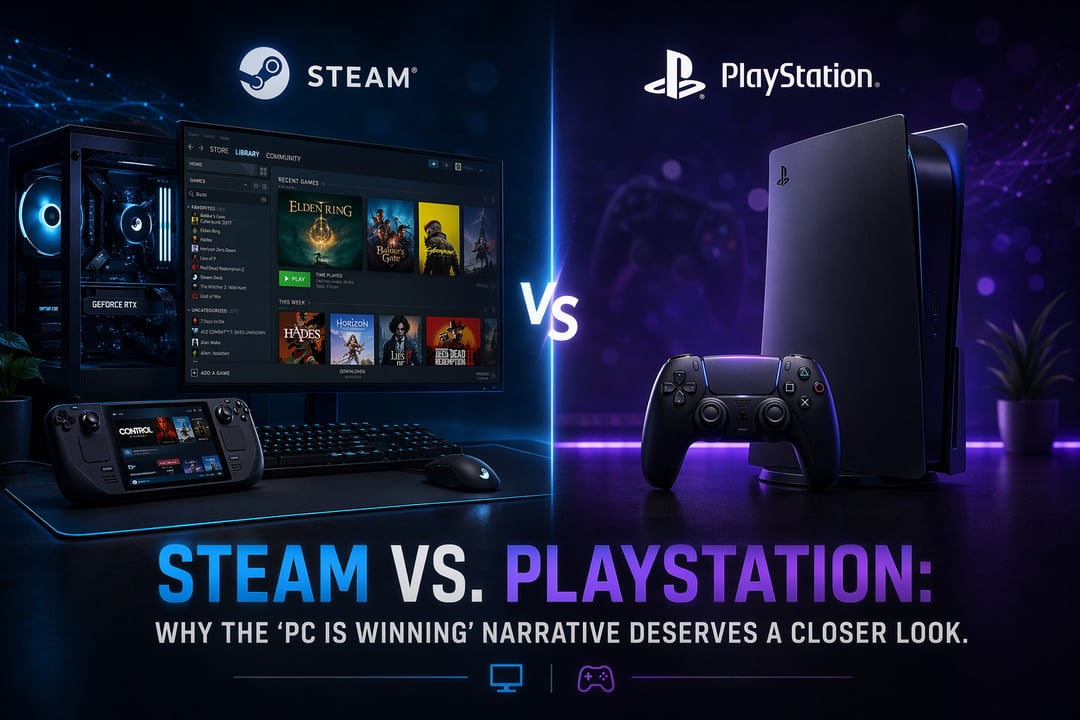
A new round of user estimates has reignited the debate over whether PlayStation is losing ground to PC gaming, with some reports suggesting Steam's active user base has pulled well ahead of Sony's console ecosystem. The numbers are eye-catching, but the story behind them is more nuanced than the headlines suggest — and Sony's own recent decisions may be doing more to shape the narrative than Valve's platform growth is.
What the Numbers Actually Say
According to TechSpot, analyst Simon Carless recently estimated that Steam has crossed 200 million monthly active users, up from roughly 198 million in the second half of 2025. PlayStation, by comparison, reported 125 million monthly active users as of the end of March 2026 — putting Steam's estimated user base more than 50% ahead of Sony's official figure.
That comparison is where things get murkier. Sony's 125 million figure is a confirmed number the company disclosed directly. Steam's 200 million figure is not. Valve's only official disclosure — submitted to the European Union under Digital Services Act rules — reported 31.1 million monthly active users in the EU during the second half of 2025. Carless's global estimate was built by extrapolating from that regional figure using Steam's publicly known bandwidth distribution data, not from a direct company statement.
Estimates vs. Confirmed Data
This difference is important for anyone relying on these numbers to make decisions:
- PlayStation's 125 million is a self-reported figure from Sony.
- Steam's 200 million is a third-party analyst projection based on partial regulatory disclosure, not a Valve-confirmed total.
Neither number is automatically more or less reliable, but comparing an estimated figure to a company’s own report overlooks the fact that they were calculated in very different ways.
Steam's Revenue Growth Is Harder to Dispute
Where the picture looks less ambiguous is on the revenue side. A report from Alinea Analytics found that Steam generated approximately $11.1 billion in gross revenue during the first half of 2026, a 14.5% increase over the same period in 2025. That puts Steam's current revenue pace ahead of 2020, a year that was widely considered a high point for digital game sales due to pandemic-driven demand. Whatever is happening with user counts, Valve's platform is clearly converting activity into spending at a growing rate.
Sony May Be Its Own Biggest Problem Right Now
Perhaps the more interesting thread in this story isn't Steam's growth at all — it's the possibility that Sony's own strategic choices are nudging its audience toward PC. Former PlayStation executive Shawn Layden previously said that bringing PlayStation titles to PC was never primarily about direct revenue, but rather about marketing and audience reach. Newer user data complicates that framing, since PC platforms now represent a genuinely massive audience rather than a supplementary one.
Two decisions in particular stand out:
- Sony has announced it will stop producing physical discs for some future PlayStation game releases, a move that removes an option that data shows can make games significantly cheaper than their digital counterparts.
- The next PlayStation console is expected to carry an unusually high price tag, driven in part by an ongoing memory chip shortage affecting component costs industry-wide.
Together, these moves risk making PlayStation less accessible on price at exactly the moment PC storefronts are becoming easier to access and more competitively priced.
Consumer Sentiment Is Already Shifting
The numbers aren't the only signal. A separate survey of thousands of PlayStation users found that nearly half are now seriously considering switching to Steam or other PC storefronts. That kind of sentiment shift among self-identified console enthusiasts is arguably more telling than any user-count estimate, since it reflects how Sony's existing customers feel about the direction of the platform rather than a top-line growth number.
The Bigger Picture: PC Gaming Isn't Just Steam
It's worth noting that Steam's dominance doesn't mean PC gaming is a single walled garden the way console ecosystems tend to be. Competing storefronts like GOG continue to operate on PC without the same platform restrictions, and Valve itself continues investing in ecosystem-expanding hardware efforts. For consumers, that means the "Steam vs. PlayStation" framing somewhat understates just how much more open and varied the broader PC gaming landscape is compared to a single console platform.