
Star Citizen Crosses a Historic Crowdfunding Milestone
Cloud Imperium Games’ Star Citizen has passed $1 billion in total player-funded revenue, marking one of the biggest milestones yet for the long-running space simulation project. The threshold was reached during the DefenseCon 2956 in-game event, cementing Star Citizen’s position as the most expensive crowdfunded project in history.
The achievement comes more than 13 years after the game’s original 2012 Kickstarter campaign. Since then, Star Citizen has grown into a massive, still-evolving space simulation backed almost entirely by its community through the direct sale of virtual ships and in-game items.
That funding model has become one of the defining parts of Star Citizen’s identity. For supporters, it reflects the scale of the project’s ambition. For critics, it remains a point of concern, especially because the game is still in alpha and key systems remain under active development.
DefenseCon 2956 Helped Push Funding Past $1 Billion
A Major In-Game Event With Daily Sales
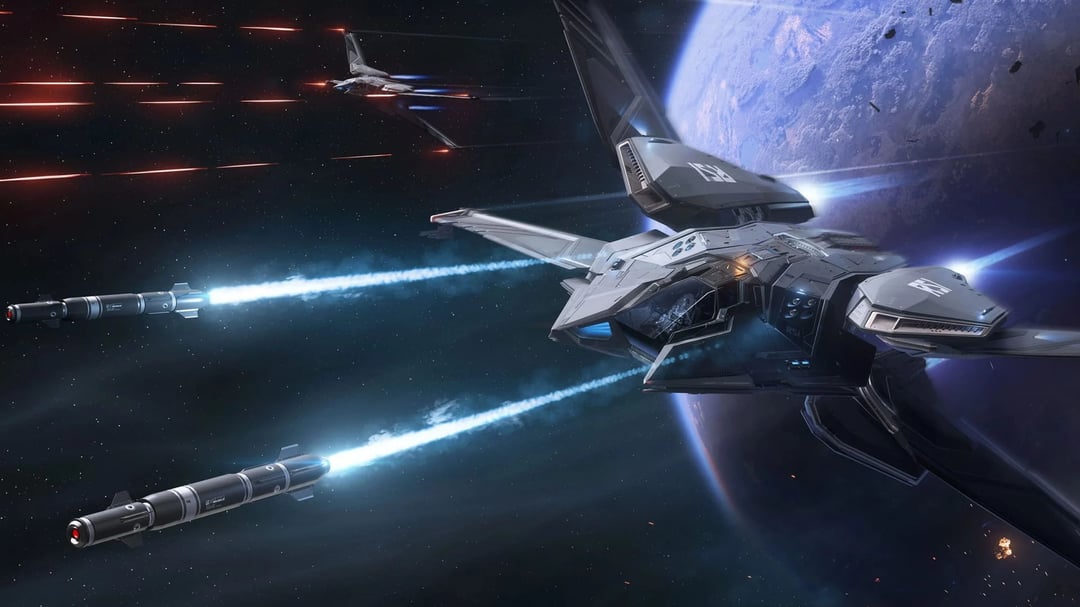
The billion-dollar milestone arrived during DefenseCon 2956, an in-game event that ran from May 14 through May 27. The event introduced several new ships and featured rolling daily sales, helping accelerate player contributions as Star Citizen moved closer to the $1 billion mark.
By the end of April, the official funding tracker stood at roughly $967.6 million. Shortly before the milestone was crossed, Star Citizen was described as rapidly approaching $1 billion in player funding while also running a free-to-play period through May 27.
That timing matters. DefenseCon combined player access, ship reveals, and limited sales activity in a way that gave the campaign a clear surge of momentum. And for a project built so heavily around community funding, those event-driven sales have become a major part of how Star Citizen continues to expand.
Free-to-Play Access During the Funding Surge
The free-to-play period added another layer to the event. While the project’s funding is driven by direct purchases, opening access during DefenseCon gave more players a chance to experience the game while new ships and sales were active.
For a title that remains in alpha, that kind of access can work as both a showcase and a reminder: Star Citizen is playable, but it is also still unfinished. That tension sits right at the heart of its billion-dollar story.
Anvil Odin Sale Becomes a Centerpiece of the Milestone
A 752-Meter Battlecruiser With a Premium Price
The $1 billion threshold was crossed on the same day Cloud Imperium put the Anvil Odin on sale. The Odin is a 752-meter battlecruiser, offered at $5,000 for the warbond version and $5,900 when purchased with store credit.
The ship is not yet flyable in-game and remains a concept. Even so, it became one of the most visible parts of the funding push around DefenseCon 2956.
For Star Citizen, this is familiar territory. Large, high-priced ships have long been central to the project’s funding model. The Anvil Odin simply pushed that pattern into the spotlight again, especially because its sale aligned directly with the billion-dollar milestone.
Limited Waves and the Odin Founders Club
The Anvil Odin was not sold as a standard open purchase. Instead, it was released in limited waves to players selected through an “Odin Founders Club” application process.
Those waves began at 4 PM UTC on May 24 and were released every four hours. That structure gave the sale a controlled, exclusive feel, turning the ship into both a major funding item and a high-profile event within DefenseCon.
The fact that a concept ship with such a high price could become part of a billion-dollar funding moment says a lot about Star Citizen’s unusual place in gaming. It is not just selling access to content. It is selling into a long-running vision that players have continued to support for more than a decade.
Squadron 42 Remains Central to the Road Ahead
A Long-Delayed Single-Player Campaign
Alongside the funding milestone, Cloud Imperium Games has continued to discuss Squadron 42, the long-delayed single-player campaign connected to the Star Citizen universe.
The campaign features performances from Mark Hamill and other Hollywood talent. It remains one of the most anticipated parts of the broader project, partly because it offers a more defined release target than the full persistent universe.
Cloud Imperium Games founder Chris Roberts has said the goal remains to release Squadron 42 in 2026, though timing is still being considered alongside wider industry factors, including the anticipated launch of Grand Theft Auto VI.
Fully Playable and Over 40 Hours Long
Roberts previously wrote that Squadron 42 was “fully playable” and over 40 hours in length, with the game moving toward an internal beta.
He also compared the expected launch to the scale of GTA 6, saying the hope was that Squadron 42 would be almost as big an event. He described it as probably the biggest-budget AAA game other than GTA 6.
That framing gives Squadron 42 a huge amount of weight inside the Star Citizen project. After years of delay, it is being positioned not just as another campaign release, but as a major gaming event in its own right.
Star Citizen Is Still in Alpha After More Than 13 Years
Core Systems Remain Under Development
Despite crossing $1 billion in funding, Star Citizen remains in alpha. Core systems are still being actively developed, and the full persistent universe has not yet reached its complete release.
The current tentative window for the full persistent universe is 2027 or 2028, which would place it one to two years after Squadron 42, assuming that campaign ships in 2026.
That long timeline is one of the biggest reasons Star Citizen continues to draw divided reactions. On one hand, its scale and funding are unmatched. On the other, the project has now spent more than 13 years in development while continuing to sell expensive virtual assets.
A Funding Model Built on Ships and In-Game Items
Cloud Imperium has funded Star Citizen almost entirely through the direct sale of virtual ships and in-game items to its community.
That model has produced extraordinary results. It has also made Star Citizen one of the most debated projects in the games industry. Some see the continued support as proof of deep player belief in a massive, ambitious space simulation. Others criticize the sale of high-priced assets for a game that is still years away from full completion.
The Anvil Odin sale captures both sides of that debate perfectly. It is a massive, expensive concept ship that helped coincide with a historic funding moment. And yet, it cannot currently be flown in-game.
Why Reaching $1 Billion Is Important
The Most Expensive Crowdfunded Project in History
Star Citizen’s $1 billion milestone is not just another funding update. It confirms the project’s place as the most expensive crowdfunded effort in history.
Few games have been shaped so directly by their communities over such a long period. Fewer still have continued to attract major financial support while remaining in alpha for more than a decade.
The achievement shows that Star Citizen still has a committed audience willing to fund its ongoing development. It also raises the stakes for what Cloud Imperium must eventually deliver.
A Project Defined by Ambition and Scrutiny
Star Citizen’s story has always been tied to ambition. A persistent universe, large-scale ships, a cinematic single-player campaign, and years of ongoing development have all helped build a project that feels unusually large.
But with that ambition comes scrutiny. The more money the project raises, the more attention falls on its unfinished systems, premium ship sales, and long-term release timeline.
Crossing $1 billion does not settle the debate around Star Citizen. If anything, it sharpens it. The project now carries an even bigger expectation: to turn unprecedented community funding into the finished experience its players have been waiting for.