
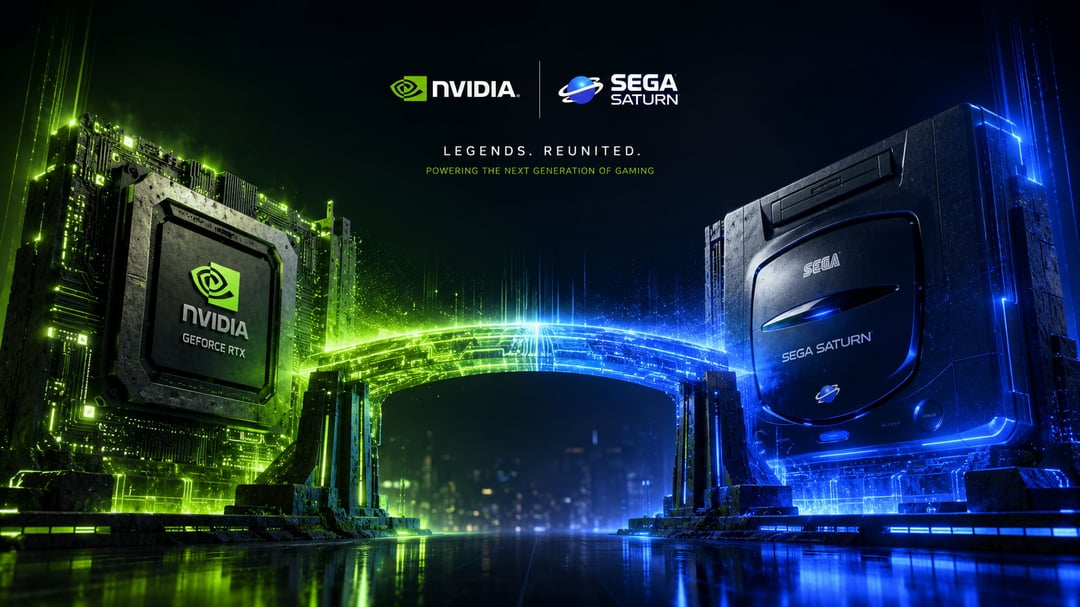
Some partnerships fade after one deal. This one came back around thirty years later — and this time, it's about power, not survival.
Nvidia and Sega have announced a new collaboration that brings Sega's next Virtua Fighter installment to Nvidia's Arm-based RTX Spark platform, marking the second time these two companies have joined forces around the same fighting game franchise. The first time was three decades ago, when Virtua Fighter made its way to PCs running Nvidia's original NV1 multimedia card. This time, the stakes — and the technology — look a lot different.
Virtua Fighter Crossroads Leads the Charge on RTX Spark
The centerpiece of the announcement is Virtua Fighter Crossroads, which will launch on laptops and desktops built around Nvidia's RTX Spark hardware. According to Nvidia, the new wave of Sega titles arriving on this platform will tap into the company's current lineup of rendering and upscaling tools, including ray tracing and DLSS.
Nvidia also pointed to AI support baked into these upcoming games, which strongly suggests integration with the company's neural rendering tools — things like Reflex and G-Assist. That's a meaningful shift from the original NV1 days, when "AI-powered rendering" wasn't even a phrase yet.
What the Partnership Brings to the Table
Here's what's confirmed so far:
- Virtua Fighter Crossroads is heading to Nvidia's RTX Spark
- The collaboration will extend beyond just this one title to other upcoming Sega games
- Support for ray tracing, DLSS, and Nvidia's AI tools is part of the package
More Sega Games Could Be Coming to RTX Spark
Neither company has confirmed which additional titles will make the jump, but that hasn't stopped speculation from spreading. Names being floated include Creative Assembly's Alien: Isolation 2, Total War: Warhammer 40,000, and the next entries in the Yakuza and Persona series. None of that is official yet — just informed guesswork based on Sega's current pipeline — but it gives a sense of the scale this partnership could reach if it expands the way early signs suggest.
The Tokyo Reunion That Sparked It All
The announcement wasn't made over a press release alone. Nvidia CEO Jensen Huang delivered the news in person at a Tokyo event built specifically to mark thirty years of collaboration between the two companies. It wasn't just a product reveal — it was a reunion.
Huang shared the stage, in spirit if not literally, with former Sega president Shoichiro Irimajiri, the man whose decision decades ago quietly kept Nvidia in business. Also in the room: Sega's current CEO Haruki Satomi, COO Shuji Utsumi, and legendary game designer Yu Suzuki. That's not a lineup you assemble for a routine product update — it's a lineup you assemble to tell a story.
How Sega Kept Nvidia From Going Under
And the story is worth telling. Huang used the occasion to look back at the 1990s, a period when Nvidia was running dangerously low on funding. Irimajiri stepped in with a $5 million cash infusion at the exact moment the company needed it most. Huang didn't downplay how close the call was — he said plainly that this investment was the only thing that kept Nvidia from going under, crediting Irimajiri's "understanding and generosity" for the company's survival.
The Dreamcast Deal That Almost Wasn't
The backstory behind that $5 million is its own twist. Sega had originally hired Nvidia to build a custom graphics chip for the Dreamcast console. But Sega ultimately walked away from that arrangement, opting instead for NEC's PowerVR GPU after deciding Nvidia's technology wasn't up to par at the time.
From Rescue to Redemption
Here's the part that turned a canceled contract into a lifeline: even though Sega scrapped the Dreamcast chip deal, Irimajiri still paid Nvidia the full $5 million the contract called for. Instead of writing it off as a straightforward payment, he structured it as an equity investment in Nvidia. That single decision gave Nvidia the runway it needed to develop the Riva 128 and, later, the GeForce 256 — two GPUs that became genuine commercial successes and helped define Nvidia's early reputation in gaming graphics.
The Investment Sega Wishes It Had Kept
Every story like this has a "what if," and this one has a big one. When Nvidia went public in 1999, Sega sold off its shares for $15 million — a threefold return on the original $5 million investment. At the time, that probably felt like a smart, tidy exit.
It doesn't look that way anymore. Nvidia's market capitalization now sits at roughly $5 trillion. Had Sega simply held onto its original stake instead of cashing out at the IPO, that position would likely be worth hundreds of billions of dollars today.


