
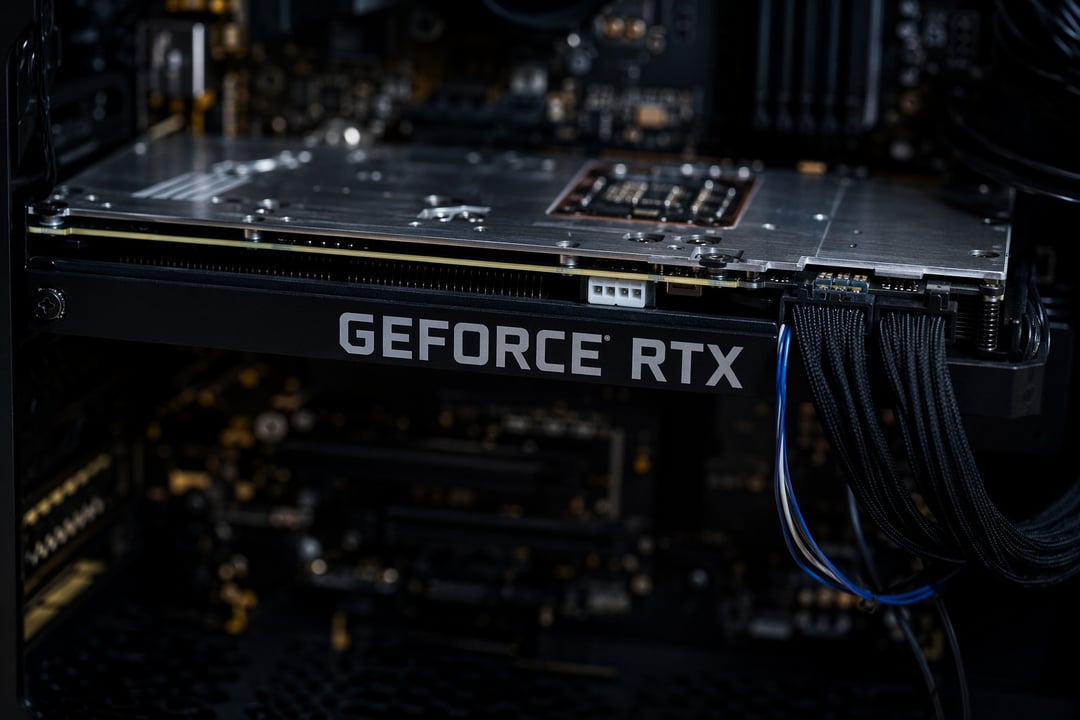
Nvidia’s RTX 50-series graphics cards may become far more expensive than they were at launch. Reported pricing based on current Chinese market rates points to sharp increases across the lineup, with several models approaching nearly twice their original price.
U.S. pricing may change slightly once it arrives, but the reported numbers show how quickly the cost of a new gaming GPU could move beyond what many PC builders planned for.
Reported RTX 50-Series Prices Compared With Launch Prices
The RTX 5060 Ti may rise from its $429 launch price to roughly $783. That would put the card close to double its original cost.
The same pattern appears higher in the lineup:
|
GPU
|
Launch Price
|
Reported Price
|
|
RTX 5060 Ti
|
$429
|
Around $783
|
|
RTX 5070
|
$549
|
Around $973
|
|
RTX 5070 Ti
|
$749
|
Around $1,408
|
|
RTX 5080
|
$999
|
Around $1,845
|
|
RTX 5090
|
$1,999
|
Around $3,843
|
The RTX 5070 is reportedly heading toward $973, while the RTX 5070 Ti could reach about $1,408. Both prices would bring the cards close to twice what buyers paid at launch.
At the top end, the increases are even harder to ignore. The RTX 5080, which launched at $999, is reportedly climbing to around $1,845. The flagship RTX 5090 could jump from $1,999 to roughly $3,843.
Why Nvidia RTX 50 GPU Prices May Be Rising
Earlier reports indicated that AMD and Nvidia had warned board partners about incoming price increases. Soon after, reports suggested a roughly 15% to 20% increase across Nvidia’s entire RTX 50 lineup.
The reported market pricing now suggests that the real-world impact could be much steeper for buyers.
The main pressure behind these increases is not gaming demand. It is AI. Nvidia’s data center business brings in high-revenue orders, making GPU manufacturing capacity more scarce and more profitable. Consumer gaming graphics cards are increasingly becoming the lower-priority product.
That changes the situation for anyone trying to build or upgrade a gaming PC. Manufacturing capacity that could serve consumer GPUs is competing with demand tied to Nvidia’s data center business.
Custom RTX 50 Graphics Cards May Cost Even More
The reported prices are baseline prices. Graphics cards from board partners with custom cooling designs or factory overclocks will likely carry even higher price tags.
That matters because buyers looking beyond the most basic version of a GPU may face an additional jump in cost. A card that already approaches double its launch price could become even more expensive once custom features are added.
For buyers who once saw a $999 GPU as costly but manageable, the reported pricing for the RTX 5080 changes the math completely. And the reported RTX 5090 price moves the flagship further into enthusiast-budget territory.
What Rising RTX 50 Prices Mean for PC Gaming
Holding onto a current graphics card may make more sense if these prices continue. With console prices also increasing, PC gaming is moving closer to becoming a genuinely expensive hobby.
Building a gaming rig could soon require an enthusiast-level budget as a default rather than as an upgrade choice. The cost of the graphics card alone could take up a much larger share of a build than it did at launch.
AMD may not provide a meaningful price-cutting alternative if this pattern holds. Both AMD and Nvidia compete for the same constrained manufacturing capacity at TSMC, which could lead AMD to make comparable increases instead of significantly undercutting Nvidia.