
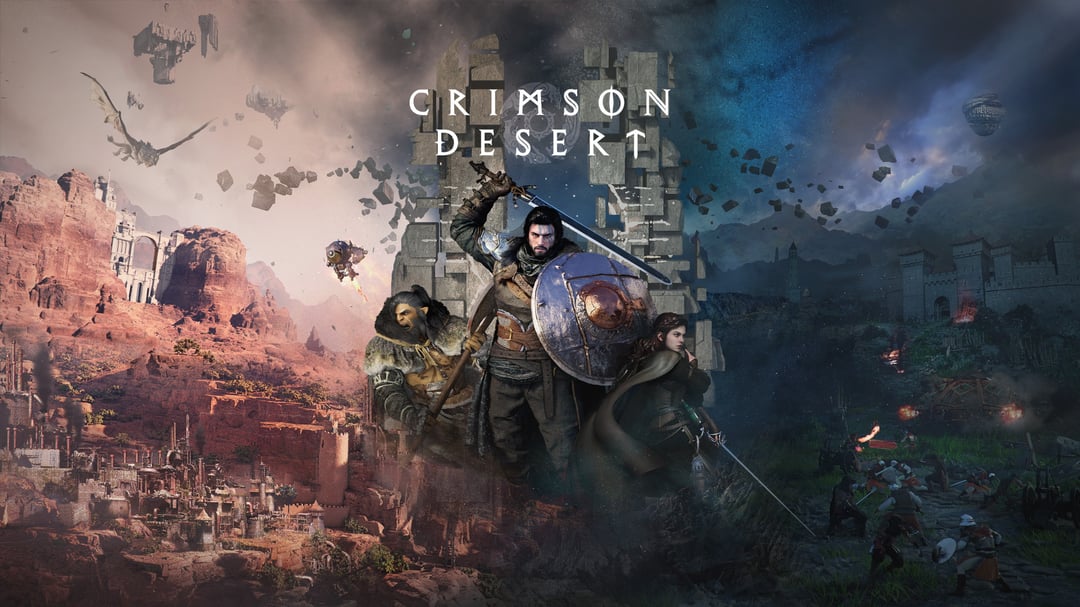
Crimson Desert looks like the kind of game that wants to grab you by the collar in the first hour and never really let go. It’s loud, cinematic, and clearly built with serious ambition. Pearl Abyss isn’t aiming for “pretty good” here. It’s aiming for one of those big fantasy action games people talk about for years.
And honestly, that’s what makes it interesting.
Because Crimson Desert doesn’t just want to be large. It wants to feel heavy. Physical. Dramatic. It wants every sword swing, every stormy landscape, every battered fortress wall to sell the idea that this world matters. From what’s been shown so far, it gets a lot right. The big question is whether the full game can carry that intensity all the way through.
What Is Crimson Desert?
Overview of the Game
Crimson Desert is an open-world action adventure from Pearl Abyss, the studio behind Black Desert. But this isn’t just another sprawling fantasy map built to keep you busy. The whole thing leans in a more cinematic, story-driven direction, with a stronger single-player focus and a much more forceful combat style.
You step into the role of Kliff, a mercenary captain moving through the war-torn world of Pywel. And Pywel has presence. This isn’t a polished fantasy postcard full of generic castles and tidy villages. It’s rough, scarred, muddy, and unstable. You can feel the conflict baked into the setting. That helps a lot, because open-world games live or die on whether their world feels like a place or just a backdrop.
Here, it feels like a place.
Why Crimson Desert Is Important
There’s a reason Crimson Desert keeps popping up in conversations about major upcoming releases. It hits a sweet spot a lot of games chase and not many nail. It has the visual punch of a big-budget action game, the scale of an open-world RPG, and a tone that feels more grounded than flashy.
That combination gives it a real shot at crossing audiences. Action players can come for the combat and spectacle. RPG fans can come for the world, the lore, and the character-driven tension. If Pearl Abyss pulls this off, Crimson Desert could land in that rare space between blockbuster accessibility and genuine depth.
Crimson Desert Review: First Impressions
Visual Presentation and World Design
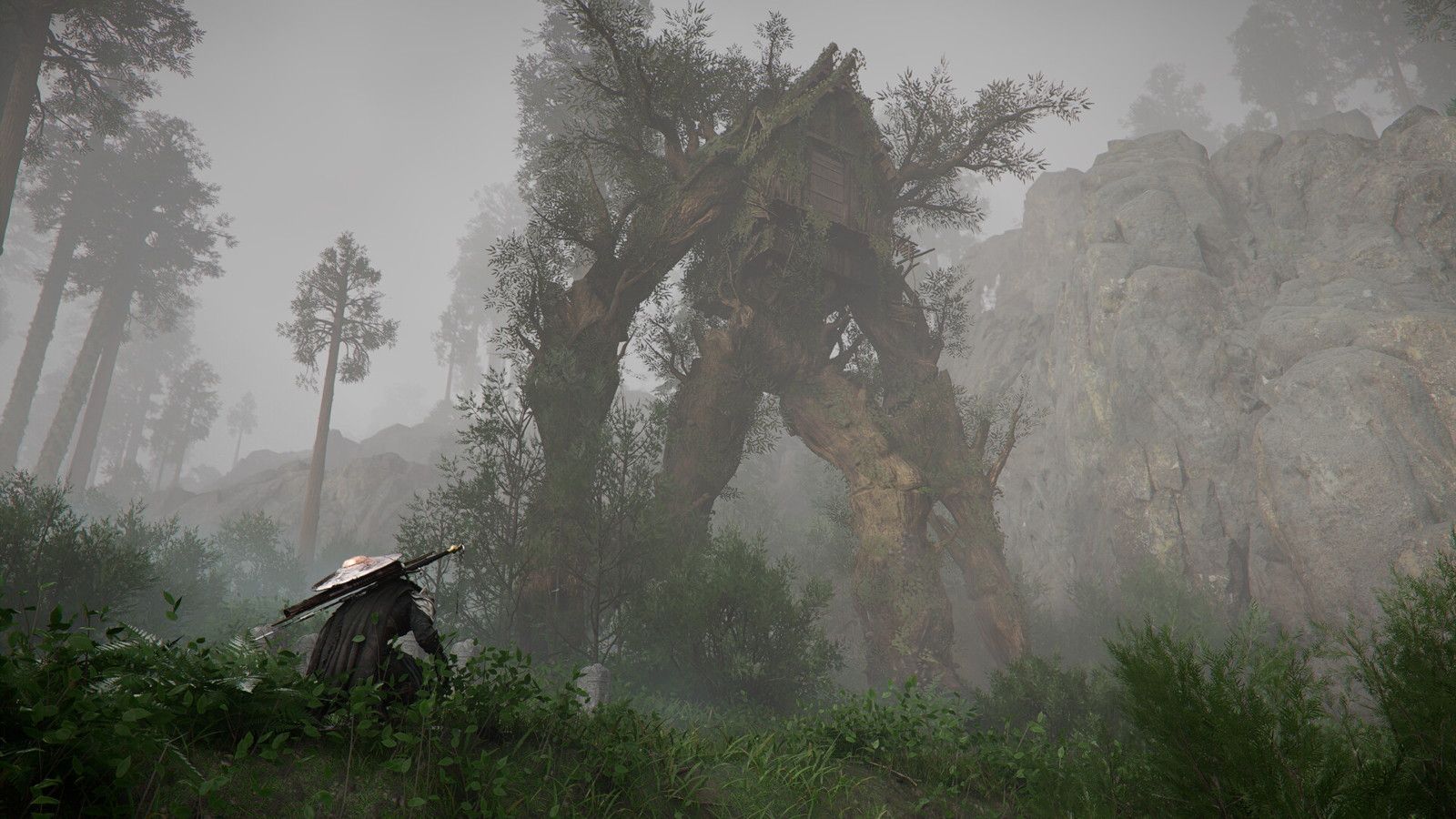
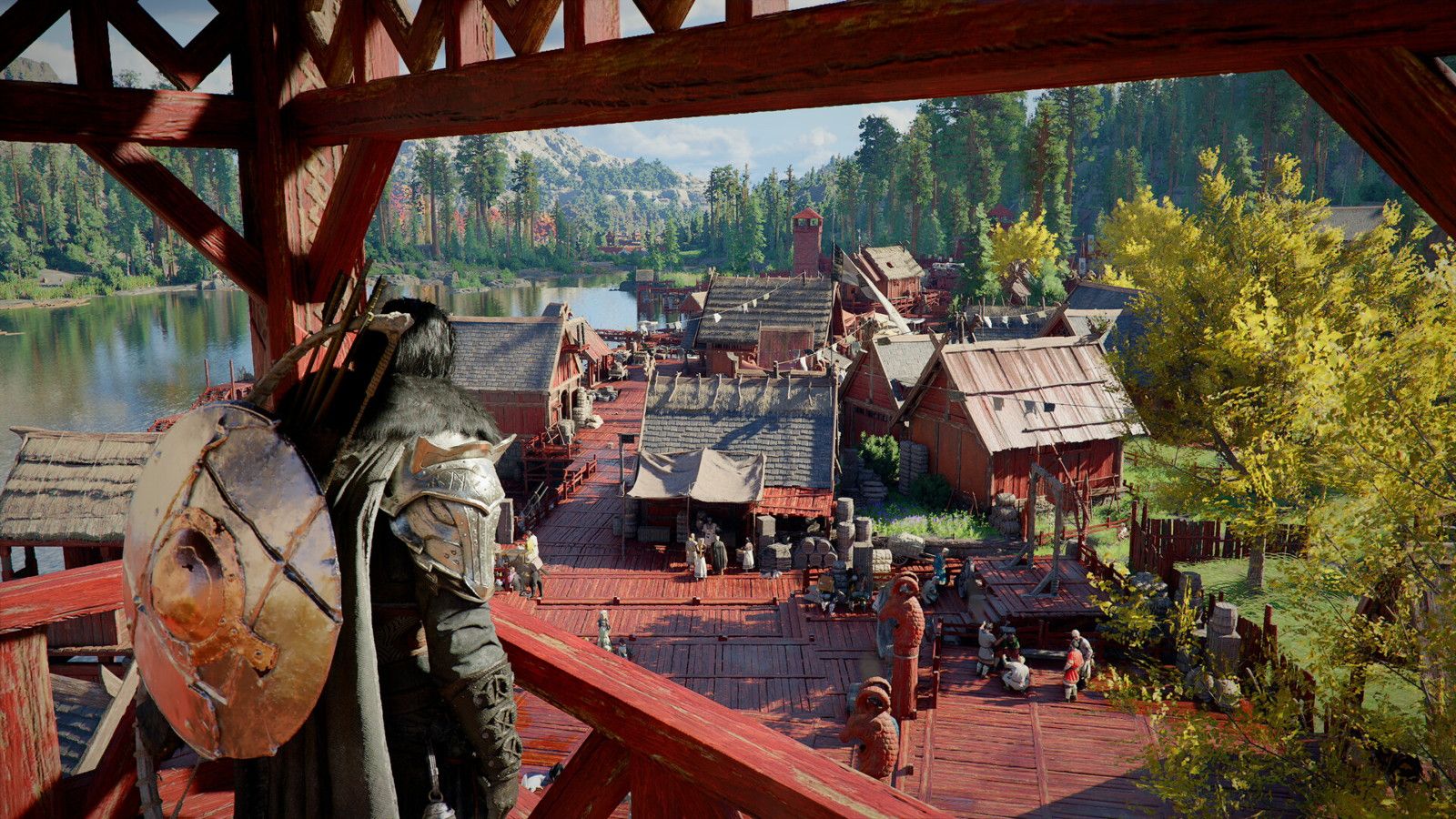
This is the part that hits first. Crimson Desert looks excellent in a way that feels expensive, but not sterile. The environments have texture. The lighting has mood. Weather doesn’t just decorate the world, it gives it atmosphere. Armor, cloth, mud, stone, smoke... it all has that layered, tactile quality that makes a game world feel inhabited instead of assembled.
And that matters more than people sometimes admit.
A lot of fantasy games are technically impressive but emotionally flat. They’re big, but they don’t stick. Crimson Desert does a better job of creating a world with friction. Pywel looks worn down. Towns look burdened. Landscapes feel exposed and hostile. There’s a harshness to the art direction that gives the game identity.
It doesn’t feel like fantasy comfort food. It feels like a place where survival costs something.
Combat Mechanics and Gameplay Feel
Combat is where Crimson Desert really tries to separate itself.
What stands out most is the sense of impact. Attacks don’t come across like soft animations sliding through enemy models. They have force. There’s weight behind the swings, and enemy reactions seem built to reinforce that every hit matters. That’s a huge deal in an action game. You can forgive a lot when combat feels satisfying moment to moment. And you really can’t forgive much when it doesn’t.
Here, the combat style looks aggressive, physical, and deliberately messy in a good way. Not sloppy. Just grounded. Fights seem to have momentum. You’re not merely tapping through attack strings. You’re driving into encounters, creating pressure, reacting to stagger, movement, and positioning in a way that feels more tangible than the floatier combat systems a lot of open-world games settle for.
There also seems to be real variety in how encounters play out. Sword combat is the obvious core, but the broader toolkit matters too. Ranged options, mounted sequences, traversal mechanics, grappling-style movement, and larger-scale fights all help the game feel less one-note. That kind of variety is important in a game this ambitious, because repetition is usually where open-world titles start to sag.
If Pearl Abyss can keep the combat evolving across the full experience, this could be one of the game’s biggest strengths.
Story Tone and Character Focus
Kliff gives the game something a lot of big fantasy adventures struggle to find: a center.
The tone here is serious, but it doesn’t look self-important. There’s grit, but not that exhausting kind of grit where every character sounds miserable and every conversation feels dipped in ash. Crimson Desert seems more interested in emotional pressure than cheap darkness. That’s a smarter approach.
The story also appears to understand that scale only works when it stays tied to people. Wars, kingdoms, factions, betrayals... all of that lands harder when there’s a character underneath it who feels like more than a vehicle for exposition. If Kliff’s arc holds together, that could give the game a stronger narrative backbone than many of its competitors.
Crimson Desert Technical Info
Technical Info
- Developer: Pearl Abyss
- Publisher: Pearl Abyss
- Engine: BlackSpace Engine
- Genre: Open-world action adventure
- Mode: Single-player
- Platforms: PC, PS5, Xbox Series X|S, Mac
- Setting: Dark fantasy continent of Pywel
- Focus: Combat, exploration, story, spectacle
Performance Expectations
This is the one area where optimism needs a little restraint.
A game that looks this dense and this simulation-heavy is going to demand a lot. That’s just reality. Big weather effects, physics-driven combat, detailed environments, fast traversal, large battles... those things are great when they work. They’re also exactly the kinds of features that can expose performance problems.
So yes, Crimson Desert looks stunning. But it also looks like a game that needs serious optimization. PC players will care about scalability and stability. Console players will care about whether combat stays smooth when things get chaotic. In a game built around impact and spectacle, technical inconsistency would hurt the experience fast.
Crimson Desert Pros and Cons
Pros
- Stunning world detail
- Combat has real impact
- Strong visual direction
- Pywel feels distinct
- Cinematic without feeling empty
Cons
- Long-term variety still uncertain
- Performance remains a concern
- Hype raises expectations hard
- Full story quality unproven
- Could still become repetitive
How Crimson Desert Compares in Today’s Market
Against Other Open-World Action RPGs
The comparisons are obvious, but Crimson Desert doesn’t feel like a direct copy of any one game.
It’s more cinematic and character-driven in presentation than Elden Ring. It looks more physically forceful in combat than The Witcher 3. And compared with Dragon’s Dogma 2, it seems more deliberately authored, less chaotic, more focused on spectacle and narrative rhythm.
That could be its edge.
It also carries baggage from Black Desert, which cuts both ways. Pearl Abyss already knows how to build visually rich worlds. But a tightly paced single-player action adventure is a different challenge from building a long-form online experience. Players are going to notice the difference immediately if mission design, pacing, or encounter structure starts to thin out.
Where It Could Stand Out
If everything clicks, Crimson Desert could land in a space the market doesn’t serve all that often: a fantasy action game with blockbuster presentation, satisfying physical combat, and a world that feels dense without feeling directionless.
That’s the dream, anyway. And honestly, it’s not an unreasonable one.
Who Should Play Crimson Desert?
Best Fit for These Players
If you like open-world fantasy games with cinematic presentation, heavy combat, and a clear sense of scale, Crimson Desert should be on your radar. It looks especially appealing for players who want immersion and spectacle without getting buried under layers of complicated systems.
If you want a game that feels immediate, forceful, and visually rich, this one makes a strong first impression.
Who May Want to Wait
If you’re cautious with big day-one releases, waiting is probably the smart move. Same if you prefer highly reactive RPG systems, deep branching choices, or slower, more tactical combat. Crimson Desert seems more focused on momentum than fine-grained roleplay.
Final Verdict: Is Crimson Desert Worth Your Hype?
Right now, Crimson Desert looks like one of the most promising fantasy action games on the horizon.
It has visual authority. It has confidence. And most importantly, it seems to understand that spectacle alone isn’t enough. The world needs texture. Combat needs feedback. Characters need emotional weight. So far, it checks a surprising number of those boxes.
But this kind of ambition always comes with risk. A game this large and this polished-looking has a lot to prove once the full experience is in players’ hands. Mission variety, technical stability, pacing, and narrative consistency will decide whether Crimson Desert becomes merely impressive or genuinely great.
Still, the early read is strong.
Not flawless. Not guaranteed. But strong enough that the hype makes sense.
Rating
★★★★☆ 4/5