
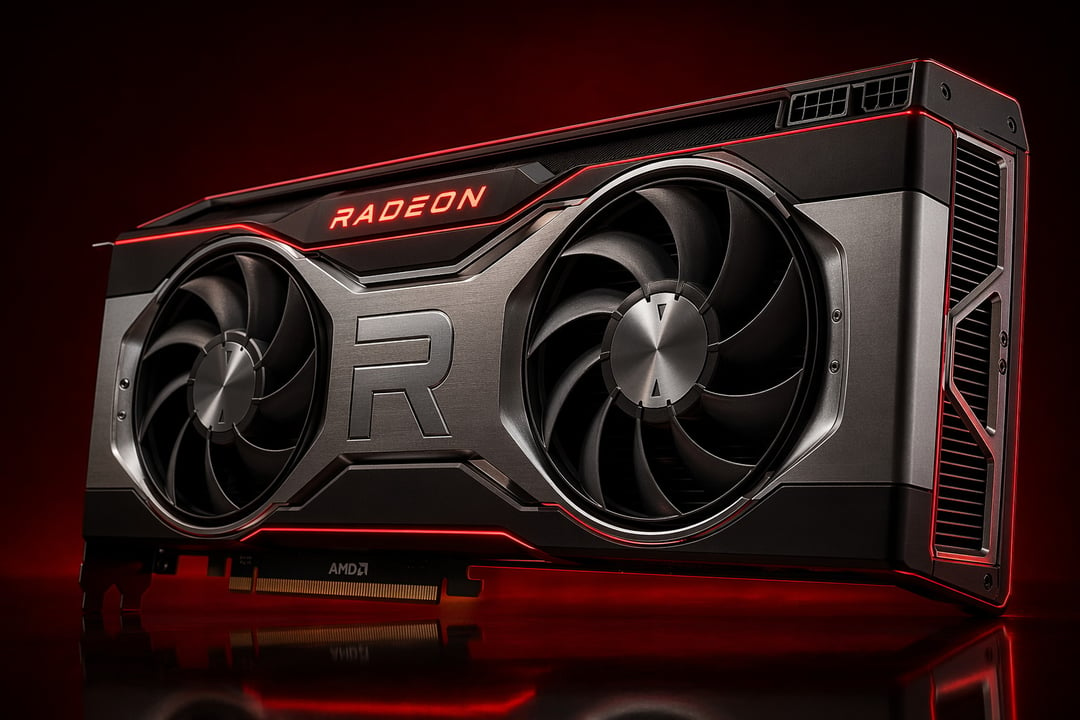
AMD has spent months teasing Multi-Frame Generation for its Radeon lineup without confirming exactly what the feature would deliver. New evidence buried inside the company's own drivers suggests development is much further along than any official announcement has let on, and the numbers involved could put AMD ahead of Nvidia in raw frame-generation output.
Where AMD's Multi-Frame Generation Push Started
The first real hint of this feature landed quietly in April, when preliminary support appeared inside the ADLX FidelityFX SDK alongside the FSR Redstone update. That update gave users the ability to select a frame generation ratio, balancing performance gains against image quality rather than being locked into a single fixed setting.
AMD kept building on that foundation with a string of significant driver releases, including FSR 4.1.1, which expanded FSR 4 upscaling support to older Radeon GPUs. None of these updates came with a public statement about Multi-Frame Generation specifically, leaving the feature's actual scope a mystery until now.
How a Third-Party Tool Exposed the Feature
The breakthrough came from outside AMD entirely. A user on the Chiphell forums ran a tool called RadeonTuner against the Adrenalin 26.6.2 WHQL drivers and uncovered settings AMD has never discussed publicly. RadeonTuner functions as a streamlined alternative to the standard Adrenalin software, built specifically to expose options that exist inside the driver code but never make it into AMD's official interface.
That's exactly what happened here. Running the tool on a Radeon RX 9070 XT surfaced controls that AMD had never flipped on for regular users, tucked away under the FSR settings panel.
What the Leaked Driver Settings Actually Show
Four previously undocumented toggles turned up during the investigation, all sitting inside the FSR panel. These included an FSR Multi Frame Generation Override, a ratio setting that scales all the way up to 8x, and separate overrides for the FSR Ray Regeneration Denoiser and FSR Neural Radiance Caching.
The 8x Ratio and Why It Matters
The 8x figure is the standout detail. Nvidia's current frame generation technology caps out at 6x, meaning it produces five generated frames for every one frame actually rendered by the GPU. AMD's discovered ceiling of 8x would generate seven frames for every real one, a meaningful jump past what Nvidia currently offers.
|
Frame Generation Ratio
|
Real Frames
|
Generated Frames
|
|
Nvidia (current max, 6x)
|
1
|
5
|
|
AMD (leaked max, 8x)
|
1
|
7
|
This matters because AMD's shipping frame generation feature today only produces a single generated frame per real one. Jumping to an 8x ratio wouldn't just be an incremental update, it would represent one of the largest single leaps in frame generation capability AMD has shown so far.
Will Higher Frame Generation Ratios Actually Improve Gameplay?
More generated frames translate to smoother motion on paper, but that number alone doesn't guarantee a better experience. AMD will need to significantly improve frame pacing and latency handling for an 8x ratio to feel good in practice rather than just look impressive in a spec sheet. Generating more frames without tightening the underlying timing and responsiveness risks introducing input lag or visual stutter that undercuts the smoother motion the higher ratio is supposed to deliver.
Why the Override Toggles Could Matter More Than the Ratio
The Ray Regeneration Denoiser and Neural Radiance Caching overrides may end up being the more consequential discovery for everyday players. Both features are currently limited to a small handful of supported titles, including Call of Duty: Black Ops 7 and Crimson Desert. If AMD enables users to force these features on in games that don't officially support them, the effect could extend far beyond that short list of titles.
That kind of override wouldn't just add a new setting menu, it would make existing Radeon hardware capable of tricks it previously couldn't access, effectively giving current GPU owners new functionality without requiring a hardware upgrade.