
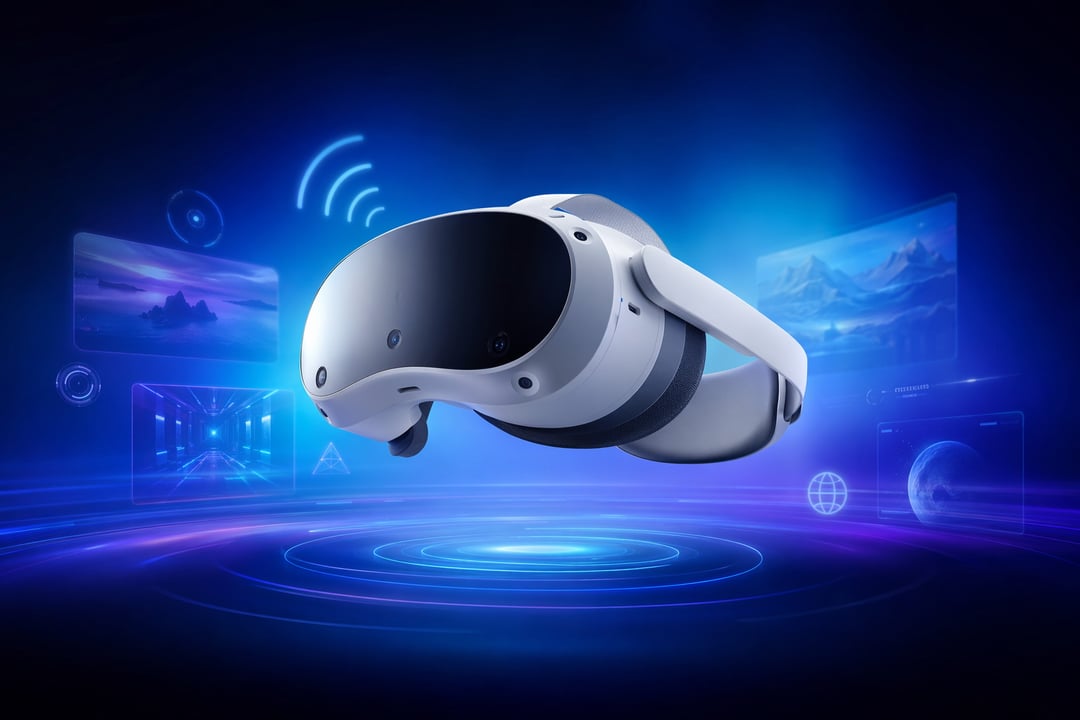
The Best VR Headsets for Total Freedom

8 Best Wireless VR Headsets for 2026: Total Freedom Ranked

If cables keep you out of VR, standalone hardware fixes that. These are the eight best VR headsets for total freedom in 2026, ranked from best overall to most anticipated.

What "Total Freedom" Really Means in VR

Wireless VR headsets fall on a spectrum. The Meta Quest 3 runs entirely from an onboard battery, while the Vision Pro and Galaxy XR ditch the PC tether but still trail an external battery pack by cable. We flag that distinction below.

How We Chose These Wireless VR Headsets

Every headset here earned its spot on standalone function, display quality, comfort, software depth, price-to-value, and availability. We excluded anything without a confirmed release window.

The 8 Best VR Headsets for Total Freedom

1. Meta Quest 3 — Best Overall

4.6

The Meta Quest 3 remains the headset most people should buy first, thanks to sharp pancake lenses and a Horizon store that dwarfs every rival's library.

Pros

Largest standalone game library of any headset

Full-color mixed reality passthrough feels genuinely useful

Also streams PC VR via Air Link

Cons

2026 price hike added $100 to MSRP

Stock strap presses uncomfortably on the forehead

8GB RAM trails newer rivals with 12–16GB

No PC needed, the deepest library available, still fairly priced.

2. Meta Quest 3S — Best Value

4.4

Meta's budget headset runs the same XR2 Gen 2 chip as the standard Quest 3, trading lens sharpness for real savings.

Pros

Same processor as the $599 Quest 3 for $250 less

Full Quest library at nearly identical performance

Cheapest genuine entry into standalone VR

Cons

Fresnel lenses add glare versus Quest 3's pancake optics

Narrower field of view than its pricier sibling

128GB base storage fills up fast

Nearly the same freedom as the Quest 3, for meaningfully less money.

3. Apple Vision Pro (M5) — Best Display

3.8

Apple's M5-powered Vision Pro still has the sharpest picture in consumer VR, though that clarity comes wrapped in an external battery pack and a price few buyers can justify.

Pros

Sharpest display of any consumer headset

M5 chip brings a real speed upgrade

Best-in-class hand and eye tracking, no controllers needed

Cons

External battery means a cord even in "wireless" use

Heavy at over 1.3 pounds for long sessions

Small native app library for the price

The best picture quality in VR undercuts its own total-freedom pitch with weight and price.

4. Samsung Galaxy XR — Best Android Alternative

4

Samsung built the Galaxy XR as an Android answer to Vision Pro, undercutting Apple's price by roughly half while adding Gemini AI and full Android app support.

Pros

Half the price of Vision Pro, comparable display

Full Google ecosystem: Maps, YouTube, Gemini built in

Runs standard Android apps alongside native XR software

Cons

Tethered battery pack means a cord to your pocket

Rigid, non-detachable strap limits reclining and travel comfort

Small controller library at launch

The closest thing to Vision Pro for Android users, though its cabled battery falls short of true freedom.

5. PICO 4 Ultra — Best Quest Alternative

4.2

ByteDance's PICO 4 Ultra out-specs the Quest 3 with 12GB of RAM and Wi-Fi 7 streaming, though US availability is inconsistent enough to check before buying.

Pros

12GB RAM beats Quest 3's 8GB for smoother multitasking

Wi-Fi 7 enables noticeably faster PC VR streaming

Rear-mounted battery balances the headset

Cons

Limited official availability in the US market

Smaller first-party library than Meta's Horizon store

Fewer accessories than Quest overall

Stronger specs than the Quest 3 on paper, held back by a thinner library.

6. HTC Vive Focus Vision — Best for PC VR Streaming

3.9

The Vive Focus Vision targets buyers who want near-wired PC VR fidelity without the wire, with DisplayPort tethering and built-in face tracking.

Pros

DisplayPort tethering delivers near-lossless PC VR visuals

Face and eye tracking for social apps

Strong passthrough quality for mixed reality work

Cons

Over $1,000 without Quest's consumer software library

Positioned more toward enterprise than casual gamers

Smaller install base means less community support

Near-wired fidelity without an actual wire, for PC VR enthusiasts who can justify the price.

7. HTC Vive XR Elite — Best for Portability

4

HTC's XR Elite folds into pocketable AR-style glasses once you detach its battery cradle, making it the pick for frequent travelers.

Pros

Detachable cradle folds into glasses-style AR mode

Base-station-free tracking in a genuinely packable design

Built-in diopter dials skip prescription lenses

Cons

Uses the older, original Snapdragon XR2 chip, not Gen 2

Frequently discounted, so MSRP is a poor value gauge

Two-hour battery life per cradle

The most portable headset here, for anyone whose freedom means fitting VR in a backpack.

8. Valve Steam Frame — Most Anticipated (Not Yet Released)

Valve's Steam Frame pairs a standalone Snapdragon 8 Gen 3 chip with a 6GHz wireless dongle for streaming your Steam library, though pricing remains unannounced amid a global memory shortage.

Pros

16GB RAM doubles most rivals, built for PC VR streaming

Native SteamOS access to your existing Steam library

Among the lightest full-featured standalone headsets at 440g

Cons

No confirmed price as of this writing

Not yet shipped, so real-world comfort is unverified

LCD panels may trail Quest 3 on contrast

The headset to watch for PC gamers chasing true wireless freedom.

We may earn a commission from affiliate links.

Learn more

.

How to Choose Your Best Wireless VR Headset

Under $400 points to the Quest 3S, while $500–$700 covers the Quest 3 or PICO 4 Ultra. Android loyalists should lean toward Galaxy XR, Apple households toward Vision Pro. PC VR streaming fans should look at the Vive Focus Vision or the upcoming Steam Frame first.

Total Freedom VR Headsets: FAQ

Do I need a PC to use these headsets? No. Every headset here runs games onboard, though several also support optional PC VR streaming.

Can I wear glasses with a standalone VR headset? Most accommodate glasses or magnetic prescription inserts, including the Quest 3 and Vision Pro.

Is the Valve Steam Frame worth waiting for? Only if you own a gaming PC and a deep Steam library. Everyone else should buy a Quest 3 now.

Final Recommendation

Most buyers should start with the Meta Quest 3, or the Quest 3S on a tighter budget. PC gamers willing to wait should watch the Steam Frame's summer 2026 launch first.


Join the Community

Get the latest tech news, reviews, and exclusive insights delivered straight to your inbox. Join a community of tech enthusiasts who trust Informer Tech.

Weekly digest

No spam

Unsubscribe anytime