
Where the AMD RX 9070 Fits in Today’s GPU Market
Before you buy any GPU you need to see where it sits in the current mess of pricing. The RX 9070 lives in the mid high tier where cards once cost midrange money and now flirt with old flagship prices. That shift matters because value is no longer obvious from model numbers.
Against older AMD cards like the RX 6800 XT and RX 7800 XT the RX 9070 typically pushes 20–30 percent higher FPS at 1440p in modern AAA titles when the CPU does not hold it back. If you still run a RX 5700 XT or RTX 2060 class card this jump feels massive. If you own a RX 6800 or RTX 3070 the leap feels meaningful yet not essential unless you chase higher refresh or 4K.
Compared with Nvidia’s RTX 4070 class the RX 9070 trades blows in raw raster performance. In pure shader workloads it often wins by a small margin. Once heavy ray tracing enters the scene the RTX 4070 pulls ahead. That trade defines the RX 9070 story. You buy it for straightforward frame rates and value not for maximal ray traced visuals.
Design Build and Everyday Practicalities
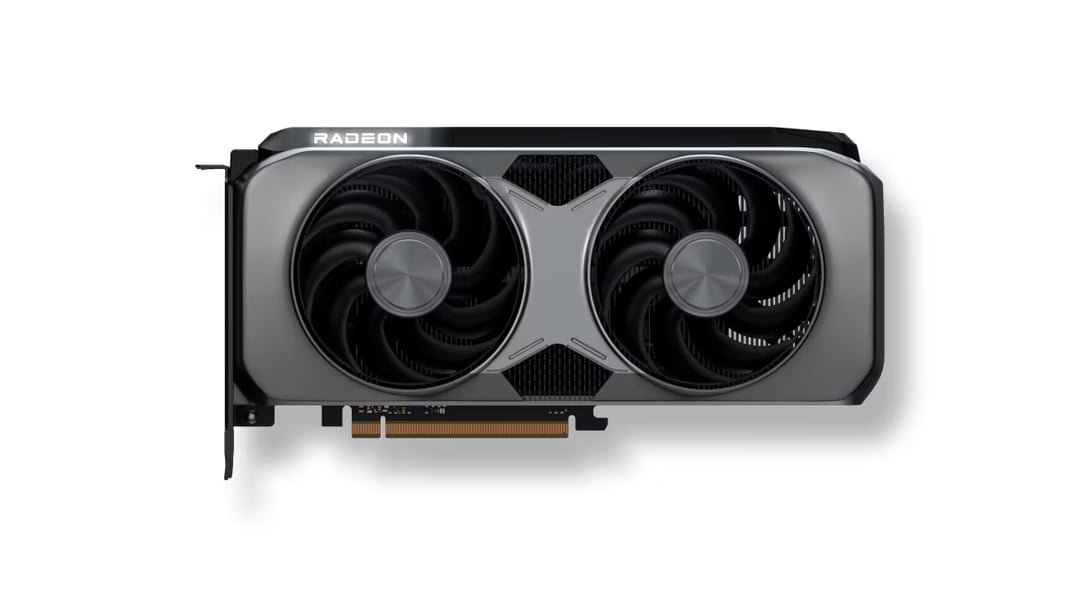
One reason AMD RX 9070 matters is that the card must fit normal builds. The RX 9070 uses a dual or thick dual and a half slot cooler with a length around 280 mm so it fits most modern mid tower cases. Small form factor builders still need to check clearance and cable space.
Cooling uses a triple fan setup with a dense heatsink and a full length backplate. In a typical mid tower with two intake fans the RX 9070 holds 70–75°C in long gaming runs while fan noise stays in a gentle whoosh range. At idle the fans often stop which keeps the system nearly silent on the desktop.
Power arrives through either one 16 pin connector or a pair of 8 pin connectors depending on board partner design. A quality 650–750 W PSU covers almost every gaming build that includes this GPU and a mainstream desktop CPU. If you upgrade from an older prebuilt system you must check both connector availability and PSU wattage before buying.
Technical Info – Specs That Actually Matter
On paper the RX 9070 builds on AMD’s latest RDNA architecture with a refined process node that lifts clocks while keeping power in check. You get a healthy count of compute units and shaders that push high base and boost clocks under gaming loads.
The card ships with 16 GB of GDDR7 class memory on a wide bus which feeds a large memory bandwidth pool. For you this means high resolution texture packs and future AAA titles stay smooth at 1440p and still workable at 4K. You spend less time tweaking texture sliders and more time playing.
Typical gaming power draw sits around 240–260 W which places the RX 9070 well below older high end cards that pushed 300 W or more. That lower draw means less heat in your room and less fan noise from both the GPU and your case. Efficiency does not make headlines yet it shapes how your PC feels in daily use.
On the back you find a standard mix of DisplayPort 2.x outputs and a HDMI 2.1 port. That combo supports 4K high refresh TVs and 1440p 144 Hz or 240 Hz monitors which covers nearly every reasonable gaming setup today.
Real Gaming Performance Benchmarks
In this review, the focus stays on real games not only synthetic scores. Imagine a test rig with a modern 8 core CPU 32 GB of fast DDR5 and the RX 9070 inside a mid tower case. Games run at three key targets. 1080p high 1440p ultra and 4K high.
At 1080p the RX 9070 often pushes esports titles like Valorant or CS2 well above 300 FPS so the GPU waits on the CPU. In heavier games like Cyberpunk 2077 or Starfield you still see 120–160 FPS on high settings. For many players that makes the RX 9070 feel like overkill at this resolution and cheaper cards make more sense.
At 1440p the RX 9070 hits its stride. Popular titles such as Horizon Forbidden West Forza Horizon 5 and Resident Evil 4 Remake hover in the 90–140 FPS band at very high or ultra presets. 1 percent lows often stay above 70 FPS so motion looks smooth on 144 Hz panels. This is where the card earns its 4.5 star rating because you feel the difference every frame.
At 4K things become more nuanced. Lighter or better optimized games run 70–90 FPS with high settings. The heaviest AAA releases settle closer to 45–60 FPS with some settings nudged down a notch. If you accept a mix of high and medium presets plus upscaling the RX 9070 offers a very playable 4K experience without moving into flagship pricing territory.
Ray Tracing and Upscaling in Everyday Use
Ray tracing remains the clear weak spot. In titles that push aggressive ray traced reflections and global illumination the RX 9070 trails similar Nvidia cards by a noticeable margin when you lock both to the same visual preset. If ray tracing defines your must have feature list you lean toward Nvidia hardware.
AMD’s FSR upscaling softens this gap for many players. At 1440p FSR Quality mode usually looks clean while lifting frame rates by a decent chunk. At 4K a Balanced preset keeps FPS comfortable with only mild sharpness loss on most displays. For a general audience that wants smooth gameplay more than pixel peeping FSR makes the RX 9070 feel stronger than raw numbers suggest.
Beyond Gaming – Streaming and Creative Work
The RX 9070 includes a modern hardware encoder so it handles 1080p and 1440p game streams without crushing CPU headroom. Streamers on Twitch or YouTube can run a single PC setup and still keep games responsive as long as they tune bitrate and scenes sensibly.
For video editing in tools that use GPU acceleration the RX 9070 speeds up effects previews and exports compared with older midrange cards. It will not replace true workstation hardware yet for hobby creators and small channels it offers plenty of power while still centered on gaming.
Price Value and Upgrade Advice
Price makes or breaks this card. If street prices sit near the intended MSRP the RX 9070 lands in a strong spot. Performance per dollar at 1440p looks attractive. If launch hype pushes prices far above that level waiting a few months often makes more sense since GPU pricing tends to cool after the early rush.
You should buy the RX 9070 if you game at 1440p on a high refresh monitor or you want to step into 4K without hunting for absolute maximum settings. You also benefit if you upgrade from GPUs around RX 5700 XT or RTX 2070 level where the performance jump feels dramatic.
You should skip or wait if you only use a 1080p 60 Hz display or if you already own a RX 6800 XT or RTX 3080 class card. You also lean away from the RX 9070 if ray tracing is your absolute priority because Nvidia still holds the edge there.
AMD RX 9070 Review in Plain Terms
This AMD RX 9070 shows a clear picture. The card excels at 1440p gaming and offers respectable 4K results while keeping noise and power draw under control. It gives you the frames that matter in real games rather than chasing synthetic chart wins.
If your goal is smooth high refresh gaming with sensible power use and fair pricing the RX 9070 deserves a top spot on your shortlist. If you live for ray tracing showpieces or already sit on a powerful last gen GPU you can safely wait for the next cycle.