
Running a business alone sounds simple. It rarely feels that way.
You answer emails between client calls. You copy data from forms into spreadsheets. You send the same welcome message again. And again. The work that grows the business competes with the work that maintains it.
That tension drains momentum.
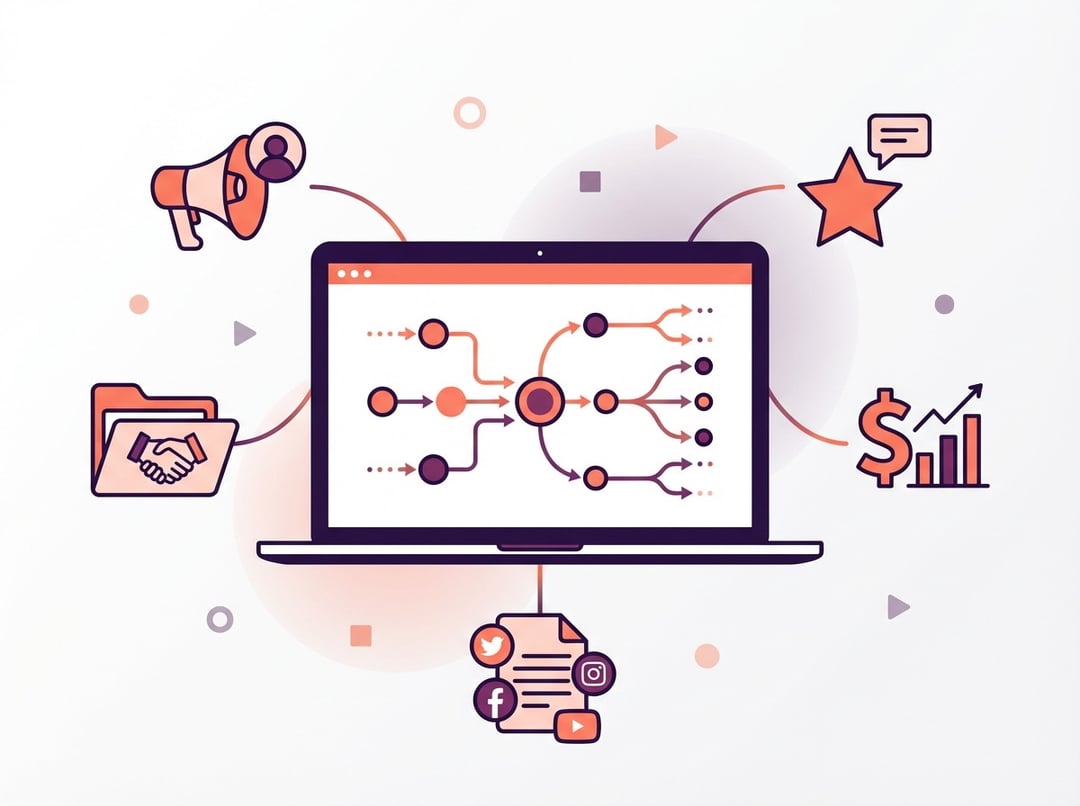
The answer isn’t working longer hours—it’s building better systems. That means setting up a few smart Zapier and Make automations to streamline your daily tasks. Here are five essential workflows that can instantly boost efficiency for any solopreneur.
Why Zapier and Make Automations Matter for Solopreneurs
Solopreneurs operate with limited cognitive bandwidth. Every manual process consumes attention that could generate revenue or deepen expertise.
Workflow automation platforms such as Zapier and Make connect your apps and execute predefined actions automatically. A trigger occurs. The system responds. No intervention required.
Conceptually the shift looks like this:
- Manual model: Lead arrives → You notice → You copy data → You send email → You update CRM
- Automated model: Lead arrives → System distributes data instantly → Confirmation sent → CRM updated
The difference compounds daily.
Zapier favors linear automation flows and quick deployment. Make offers visual logic branching and granular control. Both eliminate repetitive task chains. Choose based on complexity and budget. The strategic objective remains identical: remove yourself from predictable processes.
Automation #1: Instant Lead Capture and CRM Sync
Leads decay quickly when handled manually.
This automation triggers when someone completes a form on your website. The system immediately performs multiple actions:
- Adds the contact to your CRM
- Tags them in your email platform
- Logs the inquiry in a tracking sheet
- Sends you a notification
Nothing sits in your inbox waiting for attention.
This workflow prevents data loss and ensures consistent follow up. It also reduces transcription errors that undermine segmentation accuracy.
An advanced layer introduces conditional logic. High value inquiries can trigger priority alerts. Different services can apply distinct tags and email sequences. The system routes prospects with precision.
When built correctly this automation becomes your silent sales assistant.
Automation #2: Client Onboarding Workflow
The moment a client pays sets the tone for the relationship. Manual onboarding introduces delay and inconsistency.
A payment confirmation should trigger a structured onboarding sequence. The automation can:
- Send a welcome email with next steps
- Create a client folder in Google Drive
- Generate a project in Asana or ClickUp
- Send a scheduling link for a kickoff call
Visualize a hub model:
Payment → Automation engine → Folder + Project + Email + Calendar
Everything activates simultaneously.
This structure communicates professionalism. It also reduces the mental burden of remembering each onboarding step. For higher service tiers you can create branching logic that assigns specialized intake forms or team notifications.
Onboarding transforms from reactive scrambling into standardized execution.
Automation #3: Content Publishing and Distribution Engine
Content creation consumes energy. Distribution often stalls because it feels repetitive.
A publishing automation activates when you release a blog post or video. The workflow can:
- Generate a LinkedIn draft
- Publish a formatted post on X
- Send the article to your email list
- Log the asset in a content database
This ensures every piece of content receives systematic amplification.
Advanced implementations append UTM parameters for performance tracking. Engagement metrics can feed into Airtable or Google Sheets for analysis. Repurposing tasks can automatically populate your project manager.
Distribution becomes procedural rather than emotional. You remove the friction that often prevents consistent visibility.
Automation #4: Invoice and Payment Tracking
Revenue clarity reduces stress immediately.
When Stripe or PayPal records a payment the automation can update a revenue dashboard in real time. It can also:
- Log transactions in accounting software
- Update a monthly revenue sheet
- Notify you of successful payments
- Trigger reminders for overdue invoices
Manual bookkeeping creates blind spots. Automated tracking creates transparency.
You can also configure monthly summaries that compile total income and categorize transactions. This supports forecasting and simplifies tax preparation. Financial data stops living in scattered dashboards and starts flowing into a single operational view.
For a solopreneur that clarity matters.
Automation #5: Customer Retention and Feedback Loop
Finishing a project does not end the client relationship. It begins the retention phase.
When a project status changes to complete the system can send a feedback survey automatically. Depending on the response score the automation can:
- Request a testimonial
- Trigger a follow up email
- Tag the client for referral outreach
Positive feedback can flow directly into a testimonial database. Approved statements can populate your website after review.
This loop turns satisfied clients into marketing assets. It also surfaces dissatisfaction early which allows intervention before reputation damage occurs.
Retention should operate as a system not an afterthought.
Implementing These Zapier and Make Automations Without Overwhelm
Start with the highest friction task in your business. Build one automation. Test it thoroughly.
Keep workflows modular. Avoid unnecessary branching until the core trigger and actions run reliably. Document each step so troubleshooting remains straightforward.
Review automation logs weekly. Small adjustments prevent compounding errors. As your operations expand refine conditions and segmentation rules.
Automation should feel invisible when functioning properly. You notice it only when it fails.
How Zapier and Make Automations Really Help You
Solopreneurs often believe growth requires more effort. In reality growth requires better infrastructure.
These five Zapier and Make automations protect your focus. Lead capture ensures opportunity never slips away. Onboarding builds immediate trust. Content distribution multiplies reach. Financial tracking stabilizes decision making. Retention systems create compounding loyalty.
Build the systems once. Let them operate daily.
That is how a solo business scales without burning out.