
Podcasts Surpass AM/FM Talk Radio in Spoken-Word Listening Share
For the first time in over a decade of tracking, podcasts have overtaken AM/FM talk radio as the leading medium for spoken-word audio in the United States. According to Edison Research’s Share of Ear survey, podcasts now account for 40% of spoken-word listening time, edging past radio at 39%.
Edison has monitored spoken-word audio consumption trends for years, consistently observing a steady rise in podcast listening alongside a gradual decline in traditional radio broadcasts. This year marks a historic shift: podcasts have officially eclipsed talk radio in overall share of listening time.
Importantly, this comparison focuses strictly on spoken-word audio. Music programming on radio is not included in the data.
A Decade-Long Shift in Audio Consumption Habits
Over the last ten years, Edison Research data has shown near-continuous growth in podcast engagement. Each year, the portion of time Americans spent listening to podcasts increased, while time devoted to spoken-word radio declined.
The milestone may appear overdue given podcasting’s rapid growth, yet it also highlights the resilience of traditional radio. Despite digital disruption, talk radio maintained significant audience share for years before finally being surpassed.
The Growing Role of Video Podcasts
Video Podcasts Included in Listening Data
Edison confirmed that its statistics include video podcasts in the overall listening share. This clarification reflects a broader industry shift: video podcasting has become increasingly prominent across major platforms.
Spotify and YouTube are central to this transformation, hosting a growing number of podcasts with video components. The integration of video into podcasting represents one of the most significant trends shaping the medium.
YouTube’s Living Room Dominance
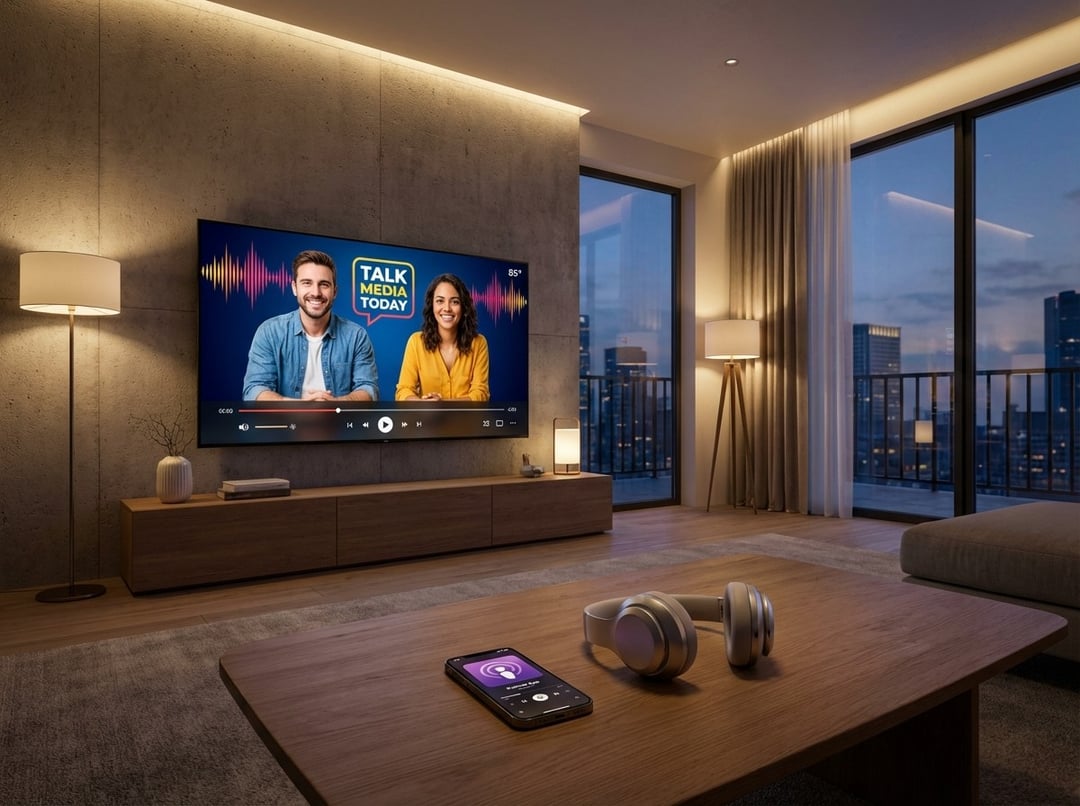
YouTube reported that viewers watched 700 million hours of podcasts per month in 2025 on living room devices, including TVs. This represents a substantial increase from 400 million hours the previous year, underscoring how podcast consumption is expanding beyond mobile devices into home entertainment environments.
The data suggests that podcasts are no longer confined to headphones and commutes; they are becoming living room content.
Netflix’s Strategic Move Into Podcasting
Netflix has entered into partnerships with iHeartMedia and Barstool Sports to bring podcasts onto its streaming service. The move positions podcasts as a modern evolution of daytime talk shows, signaling confidence from a major streaming platform in spoken-word entertainment as premium viewing content.
Industry investment at this level reinforces podcasting’s growing cultural and commercial significance.
Audio vs. Video: How Consumers Actually Engage With Podcasts
Majority of Adults Consume Both Audio and Video Formats
Triton Digital’s U.S. Podcast Report for 2025 reveals that 80% of consumers over 18 engage with both audio and video podcasts. Meanwhile, 13% consume audio-only podcasts, and 7% exclusively watch video podcasts.
These figures indicate that most listeners do not see audio and video as mutually exclusive formats. Instead, they move fluidly between them.
Genre Influences Format Preference
Format preferences vary significantly by content category:
- Video-skewing genres: Music, sports, comedy, and news
- Audio-skewing genres: Science, history, art, fiction, and true crime
The differences suggest that visual engagement enhances certain types of content, while immersive storytelling and informational genres remain well-suited to audio-first experiences.
Weekly Podcast Audience Reaches 115 Million Americans
Edison’s research estimates that there are 115 million weekly podcast listeners in the United States. Among weekly listeners aged 13 and older, 85% consume podcasts with some form of video component, marking a 7% increase since 2023.
Despite the rise of video, only 5% of listeners report watching podcasts without listening to them, reinforcing that audio remains foundational to the format.
Key Trends Driving Podcast Growth in the U.S.
Cross-Platform Distribution Expands Reach
Podcast distribution across Spotify, YouTube, Netflix, and traditional podcast platforms has expanded accessibility. The presence of podcasts across both audio apps and video streaming services broadens audience exposure and engagement opportunities.
Living Room Viewing Signals Mainstream Integration
The dramatic increase in living room podcast viewing highlights a behavioral shift. Podcasts are no longer secondary content consumed passively; they are increasingly treated as primary entertainment experiences.
Hybrid Consumption Becomes the Norm
With 80% of adults consuming both audio and video podcasts, hybrid engagement has become standard behavior. Rather than replacing audio, video enhances discoverability and deepens audience connection.