
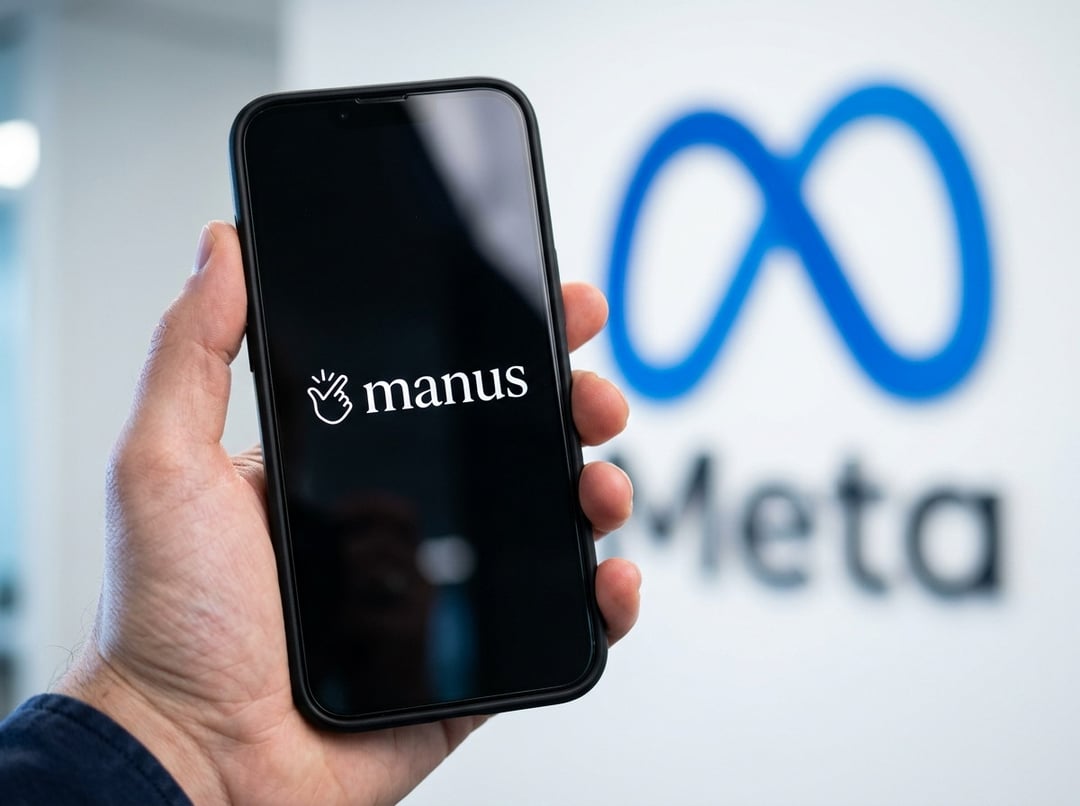
Meta Tests Manus AI Agent for Desktop Task Automation
Meta is testing a new AI agent from Manus that works on both Windows PCs and Macs, handling tasks directly on a user's computer. Unlike basic chatbots that only give suggestions, this system is built for real desktop automation—meaning the AI can actually perform actions for you. This change is important because it transforms AI from just offering advice to actually getting things done.
According to the reported details, the Manus agent can interact with a computer much like a person would. It can navigate applications, perform actions across desktop environments, and help automate multi-step workflows. That makes it relevant for users who want help with repetitive digital tasks, especially on mainstream personal computing platforms like Windows and macOS.
How the Manus AI Agent Works on Windows and Mac
AI Agent Controls Desktop Applications
The core idea behind Manus is simple: it acts inside the operating system environment to complete tasks on behalf of the user. Instead of staying inside a browser tab or chat window, the AI agent is intended to engage with desktop apps and system-level workflows. On both Windows and Mac, that means the agent can become part of day-to-day computing rather than a separate assistant sitting off to the side.
This kind of AI desktop control points to a more active model of personal computing. Users are no longer limited to asking for instructions and then manually carrying them out. The Manus system is positioned as software that can interpret a request and translate it into on-screen actions.
Task Automation Goes Beyond Simple Commands
What makes desktop AI agents notable is their ability to handle sequences. Rather than completing a single command, they can work through a chain of steps tied to a goal. In practice, that means an AI agent can potentially reduce the friction of repetitive workflows and save time across ordinary computer use.
The reported feature set suggests Meta is interested in making automation feel more natural on consumer devices. Windows PCs and Macs are where many users handle work, communication, research, and file management. An AI agent that operates across those environments could make automation more accessible to people who have never used advanced scripting tools or dedicated automation software.
Why Meta's Manus AI Agent Is Important
Desktop AI Signals a Broader Shift in Personal Computing
Meta's move to test Manus on desktop platforms reflects a larger race around AI agents that can take action, not just generate text. That's the real story here. The industry has already seen an explosion of AI assistants that summarize, write, and answer questions. But a true agent changes the equation by executing tasks inside real software environments.
For users, that could mean less switching between apps, less manual repetition, and faster completion of routine tasks. For the broader market, it raises the stakes in AI product design. Companies are no longer only competing on how smart their models sound. They're competing on whether those systems can reliably perform useful work inside the tools people already use.
Windows and Mac Support Expands Potential Reach
Support for both Windows and macOS is significant because it puts the Manus AI concept in front of a massive desktop audience. These are the two biggest consumer desktop operating systems, and compatibility across both platforms gives Meta a wider testing ground for real-world AI automation use cases.
That cross-platform reach also suggests a practical strategy. If AI agents are going to become part of everyday computing, they can't live in a narrow or experimental environment forever. They need to work where people already spend their time, and for most users, that's on a Windows laptop, a work desktop, or a MacBook.
Potential Use Cases for an AI Agent on a Personal Computer
Repetitive Workflow Automation
A desktop AI agent is especially compelling for repetitive tasks that follow recognizable patterns. The article centers on the concept of automating tasks directly on a PC or Mac, which hints at scenarios where a user could delegate routine actions and reduce manual effort. That could include moving through software menus, handling repeated sequences, or performing common operations that usually require constant user input.
More Natural Computer Interaction
Another important angle is usability. Traditional automation tools often ask users to build scripts, define rigid rules, or understand technical workflows. An AI agent changes that relationship. Instead of programming the machine in a formal way, the user can describe what needs to happen, and the system attempts to perform it.
That kind of interaction lowers the barrier to automation. It brings the idea of "computer control by intent" closer to mainstream use, which is a big deal for people who want the benefits of automation without having to learn the mechanics behind it.
What Meta's Manus Test Suggests About the Future of AI Agents
AI Is Moving From Assistant to Operator
The Manus rollout points to a future where AI systems are expected to act as operators inside digital environments. That's a more ambitious role than answering questions or drafting content. It places the AI inside the workflow itself, where value depends on reliability, action, and task completion.
For Meta, this kind of experiment signals interest in practical AI deployment tied to real user behavior on personal devices. For consumers, it hints at a near future where desktop operating systems may increasingly include AI layers capable of managing actions across applications.
Automation on Consumer Devices Is Becoming a Priority
The focus on Windows PCs and Macs also shows that consumer device automation is no longer a fringe idea. AI companies are paying attention to how people actually use their computers, and they're building tools that fit those habits. The desktop remains one of the most important environments for productivity, and AI agents that can function there may become a defining category in the next phase of personal computing.