
January discounts feel like found money. They’re not. Retailers clear returns, thin out last-year inventory, and nudge you toward upgrades you didn’t plan. Consequently, the smartest deal seekers don’t chase percentages. They chase outcomes. This watchlist gives you a decision system that separates real value from glossy markdowns.
Overview: why January discounts look “good” on paper
January has two personalities. One is legit clearance on mature products with stable pricing. The other is price theater with loud badges and quiet compromises. You’ll see inflated MSRPs, “bundle savings” that include throwaway accessories, and models discounted because the support runway looks short.
So the question isn’t “Is it on sale?” The question is “Does this purchase stay good after the dopamine fades?” Use four lenses throughout this January Tech Deals Watchlist.
- Total cost of ownership: device, accessories, warranty, and subscriptions.
- Performance-per-dollar: measured in your real workload, not a benchmark screenshot.
- Longevity: updates, battery aging behavior, repairability, and parts availability.
- Opportunity cost: what typically drops next quarter when new lines arrive.
How to decide what’s actually worth buying
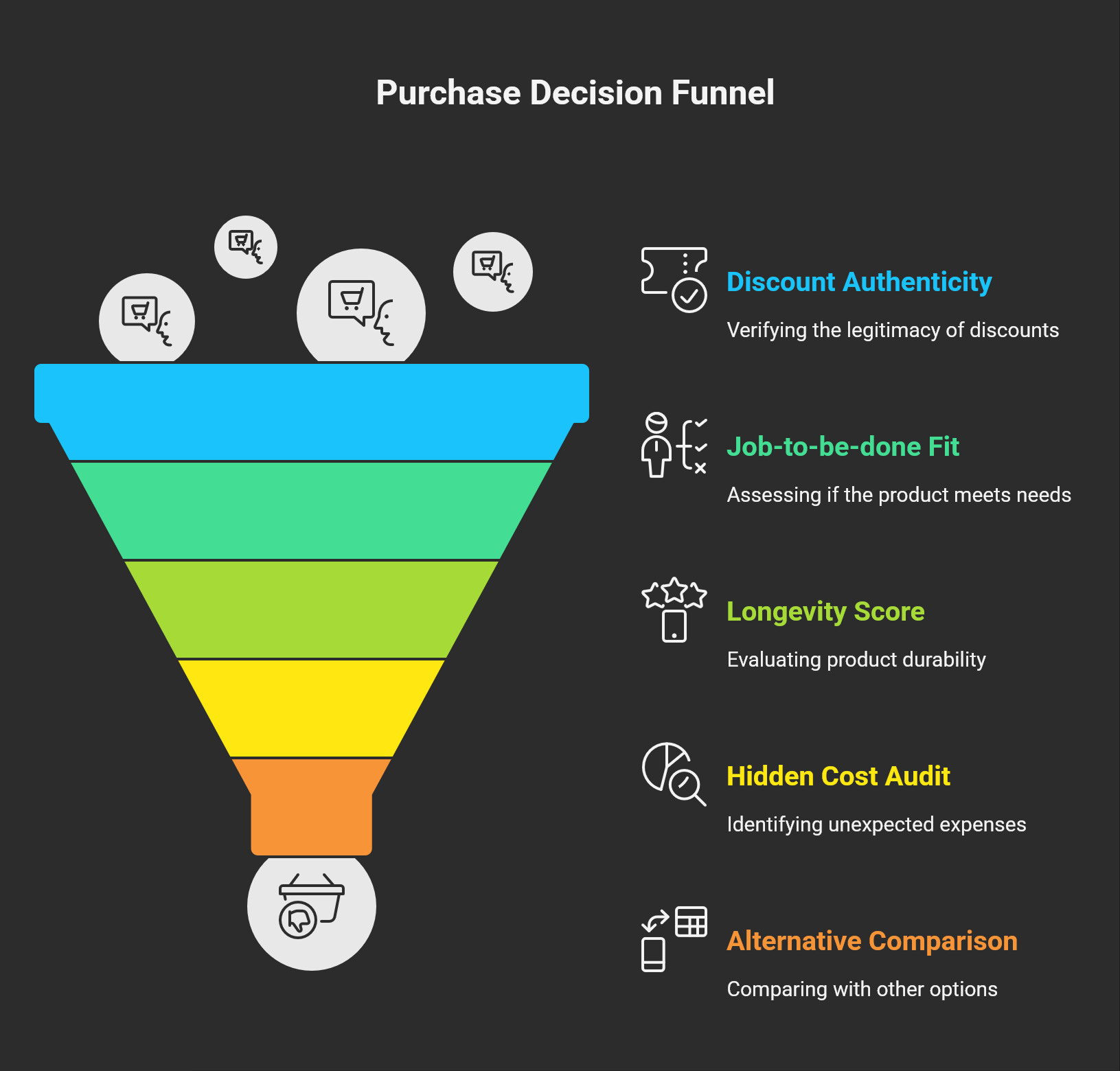
Step 1 — Verify it’s a real discount and not price theater
Start with price history. You want the street price trend, not the “list price” fiction. Check multiple retailers and look for a discount that beats the recent median, not just last week’s spike. Also watch for coupon-gated pricing that vanishes at checkout.
Rule: Buy only when today’s price beats the 60–90 day median by a meaningful margin. Otherwise you’re renting urgency.
Step 2 — Map the product to your actual job-to-be-done
A “good deal” that doesn’t fix friction becomes clutter. Deal seekers win by naming the exact pain they’re solving. Maybe exports take forever. Maybe your Wi-Fi drops during calls. Maybe you constantly juggle windows on a cramped screen.
Rule: If you can’t describe the before-and-after in one sentence, skip.
Step 3 — Score longevity and support like an investor
Support policy is the quiet half of value. For phones and tablets, update horizon matters as much as the chip. For routers, firmware maintenance decides whether the device ages gracefully or becomes a liability. For laptops, repairability and parts access determine whether a battery replacement feels routine or impossible.
Rule: Skip products with vague update promises and weak warranty clarity.
Step 4 — Account for hidden costs that destroy deal math
Accessories ambush budgets. USB-C docks, chargers, styluses, controller batteries, cases, and “required” apps add up fast. Subscriptions hurt more. Security suites, cloud storage tiers, and device management add-ons often cost more than the discount over two years.
Rule: Compute an all-in 24-month cost before buying.
Step 5 — Compare against the next best alternative in the same spend band
Always run a “shadow competitor” check. At the same price, you might get a refurbished premium model with better build quality and longer usefulness. Conversely, you might pay slightly more for a model with a far longer support horizon.
Rule: Buy only if it beats a credible alternative today.
What’s worth buying (high-confidence picks)
Laptops that become good buys only when they cross a price threshold
Laptop deals work best when you target capability floors. For most people, 16 GB RAM is the practical baseline for multitasking longevity. Storage depends on use, but 512 GB reduces “external drive tax.” Display quality matters more than many realize because you stare at it daily.
Buy signals include last-generation premium models with strong thermals and keyboards, plus business-class lines with better service manuals and parts availability. Skip signals include 8 GB RAM at modern price points and soldered storage on budget devices.
If you’re evaluating responsiveness, remember that speed is not just CPU. It’s thermals, sustained performance, and storage behavior under load.
Noise-cancelling headphones and earbuds when the discount beats depreciation
Audio is a sweet spot for January: mature technology with predictable sale floors. Look for multipoint stability, transparency mode quality, and a replacement ecosystem for tips and pads. Call performance matters because mic tuning varies wildly.
Skip anything with unreliable pairing, heavy app permissions, or battery designs that make early death inevitable. A deep discount can’t fix a device that becomes e-waste when the battery degrades.
Monitors that upgrade daily life more than flashy gadgets
A monitor upgrade often beats a gadget upgrade because it touches every task. Productivity gains show up as fewer alt-tabs and less eye strain. For laptop users, USB-C with power delivery can also simplify your desk.
Buy signals include clear panel specs, strong warranty terms, a reasonable pixel policy, and ergonomics. Skip listings with vague “HDR ready” marketing and unknown panel sourcing.
Wi‑Fi routers and mesh systems when they fix real dead zones
Mesh makes sense when walls and distance kill signal. A single strong router can outperform weak mesh kits in smaller homes. Support policy matters here because routers live on your network perimeter.
Buy signals include current standards support, stable firmware history, and a vendor that actually ships updates. Skip abandoned app ecosystems and devices with weak security track records.
Storage deals that are actually safe bets
Storage is not the place for mystery brands. You want predictable sustained performance, decent thermals, and a real warranty. For external SSDs, enclosure quality and heat management matter more than peak reads.
Skip too-cheap drives with inflated benchmark claims and unclear controller behavior. Data recovery costs erase any “deal” instantly.
What to skip (common traps that look like bargains)
Ultra-cheap smart home bundles with privacy and support red flags
Smart home deals look irresistible because the unit price drops hard. The risk is support decay. Many budget devices depend on cloud services that can change or disappear. Prioritize products with local control options and clear security update history.
“Gaming” laptops discounted heavily for a reason
Deeply discounted gaming laptops often hide thermal throttling, loud fans, weak panels, and poor power delivery. Demand sustained performance evidence from independent testing. If you can’t find it, treat it as a warning.
Printers and “cheap” consumable ecosystems
Printers can turn into subscription traps through cartridge DRM and high cost per page. Price the ink, not the plastic. If the vendor pushes account creation for basic printing, walk away.
Last-gen streaming devices and bargain tablets that stop receiving updates
End-of-support is not theoretical. It affects security and app compatibility. Pay attention to update policies and vendor reputation. A cheap tablet with a short runway becomes a frustrating brick.
Accessories with fake specs and compliance theater
Chargers, USB-C cables, and power banks attract spec inflation. Buy from reputable sellers with real certifications and generous returns. When you see impossible wattage claims, believe the physics.
Tactical playbook: how to shop like a pro
Build a shortlist and pre-commit your walk-away price
Pick two or three models per category and set a walk-away price for each. Track for a week. This strategy prevents impulse buys and makes real deals obvious.
Use return windows as a performance benchmark period
Treat the return period like a testing lab. Run a battery rundown on laptops. Test earbuds on calls in noisy places. Walk your home with a Wi-Fi analyzer and check dead zones. Keep packaging pristine and document issues early.
Negotiate the last 10 percent with price-match and stacking
Price-match policies vary, but many retailers honor them when the competitor is legitimate and in stock. Stack carefully: cashback portals and card offers help, yet complex stacking increases return friction.
Refurb and open-box without regret
Manufacturer refurbished usually beats random marketplace refurb. Verify warranty terms, accessory completeness, and return conditions. If the seller can’t answer basic questions, skip.
Conclusion
The winning move in January is disciplined buying. You’re not collecting discounts. You’re buying fewer annoyances and more useful days. Use this watchlist to set thresholds, validate support, price the full two-year cost, and skip anything that relies on hype to feel valuable.