
Why Web3 Information Still Feels Hard to Access
Web3 has grown into a big, sprawling ecosystem—crypto assets, NFTs, DAOs, Layer2 solutions, and more—forming what’s essentially a large-scale decentralized system. And yet, when you actually try to find what you need, it can feel weirdly inefficient.
A big reason is the way Web3 information is distributed. Data and insights live across on-chain nodes, decentralized platforms, social media, and industry forums. That fragmentation creates “data silos,” where users end up bouncing between sources just to assemble a full picture.
Another friction point: on-chain data itself. It often comes in complex structures, which makes customized queries difficult for non-technical users. So even if the data is public and “transparent,” accessing it in a practical way can still be out of reach unless you know how to query it.
Traditional search engines also struggle here because they don’t offer advanced integration of Web3-specific results. And generic AI tools, while helpful for broad Q&A, don’t deeply cover on-chain scenarios and industry-specific needs—leading to gaps in accuracy and usefulness when the question is Web3-native.
What iChatGo Is Positioning Itself to Solve
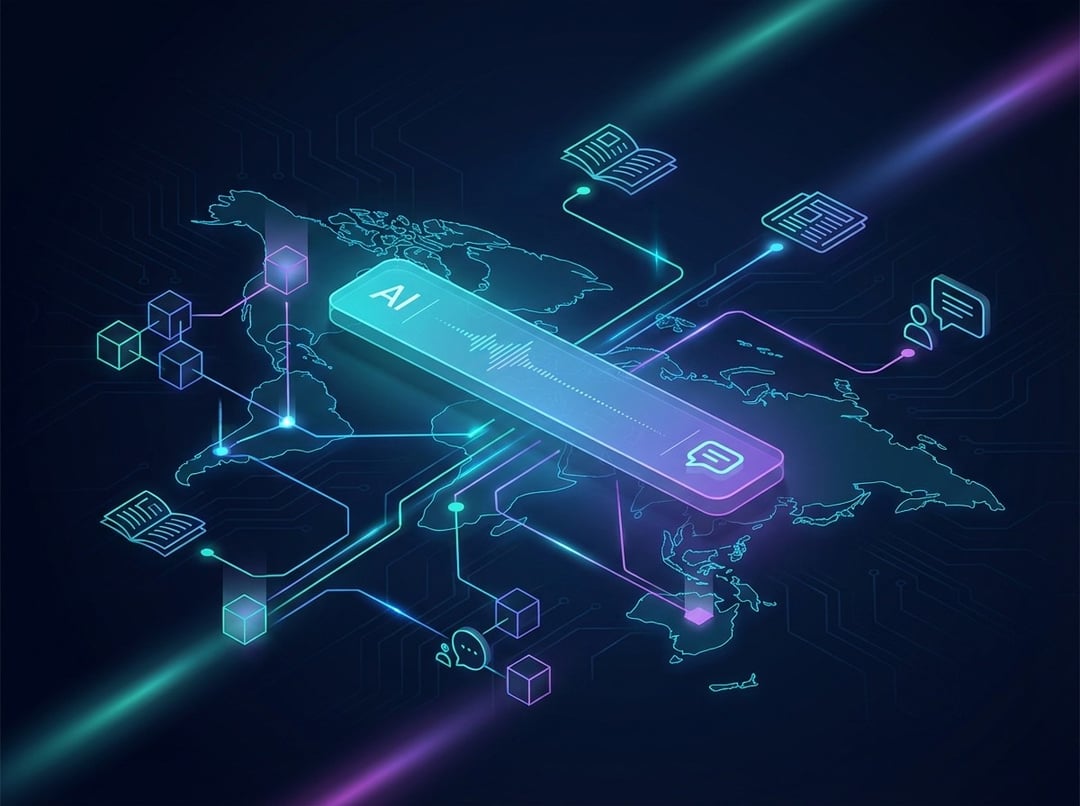
iChatGo positions itself as an AI-driven Web3 search engine built around a specific idea: “conversational interaction + full integration of on-chain and off-chain data.”
The product is framed as a direct response to two recurring Web3 problems:
- Fragmented Web3 data spread across many locations and platforms
- High barriers to on-chain data querying, especially for users without technical skills
The promise is straightforward: deliver real-time, accurate, and personalized information search services to Web3 users globally—while making the experience feel more usable and more aligned with how Web3 users actually search and learn.
“AI-Powered Web3 Search Engine”: What That Means in Practice
iChatGo describes its approach as combining artificial intelligence with traditional search engine technology, with the goal of enabling users (from different backgrounds) to navigate decentralized information more easily.
Instead of treating Web3 search like a generic web search problem, it’s positioned as a specialized retrieval layer for Web3—one built to handle both the off-chain knowledge flow (like news and social updates) and the on-chain reality (structured blockchain data).
iChatGo’s Core Capabilities (As Described)
Comprehensive Off-Chain Knowledge Base for Web3 Research
iChatGo’s first core capability is an off-chain knowledge base that aggregates:
- whitepapers
- foundational knowledge
- news
- social updates
This content is described as being organized into a real-time, structured database. The emphasis here is not only collecting information, but structuring it so users can retrieve it more effectively—especially when they’re trying to connect dots across multiple sources.
Customized On-Chain Data Query Through Natural Conversation
The second capability focuses on on-chain access: customized on-chain data query.
The key point is that iChatGo aims to reduce barriers to on-chain data analysis by letting users define query requirements through natural conversations. In other words, instead of requiring technical query construction, the tool is positioned to translate user intent (expressed conversationally) into a workable way to retrieve and analyze on-chain data.
This is meant to make on-chain exploration less intimidating—and more available to users who don’t want to learn technical querying just to answer basic questions.
Conversational Interaction That Lowers Web3 Entry Barriers
The third capability is the interface itself: intuitive conversational interaction.
iChatGo adopts a natural language interface designed to remove the need for technical jargon. Compared with:
- traditional keyword-based search
- generic AI responses
…it’s positioned as aligning more closely with Web3 user habits, with the goal of lowering entry barriers and making information access feel more direct.
What Web3 Use Cases iChatGo Says It Covers
Leveraging its on-chain + off-chain strengths, iChatGo describes coverage across a range of core Web3 information needs, including:
- real-time data queries
- basic Web3 Q&A
- tracking industry events
- monitoring key entity dynamics
The broader idea is “comprehensive coverage” across both on-chain and off-chain contexts, so users don’t have to stitch together insights from multiple platforms manually.
Mission, Iteration, and Ecosystem Expansion Goals
iChatGo frames its guiding mission as providing accurate, real-time, comprehensive, and in-depth Web3 information to global users.
From a roadmap perspective, it indicates ongoing plans to:
- iterate product capabilities
- integrate more emerging blockchains
- integrate more Web3 application scenarios
- expand its feature set
The stated aim behind that expansion is to support the large-scale development of the Web3 ecosystem through continued technological innovation.
Q&A
Q1: What makes iChatGo different from a traditional search engine for Web3 topics?
Traditional search engines are described as lacking advanced result integration for Web3-specific needs, while iChatGo is positioned as a dedicated Web3 search engine integrating on-chain and off-chain data with conversational interaction.
Q2: How does iChatGo help non-technical users query on-chain data?
iChatGo describes “customized on-chain data query” where users define query requirements through natural conversations, reducing the barrier created by complex on-chain data structures.
Q3: What types of Web3 information does iChatGo aim to cover?
It describes coverage from real-time data queries and basic Web3 Q&A to tracking industry events and monitoring key entity dynamics, spanning both on-chain and off-chain information.
Website: www.ichatgo.ai