
Your washing machine hums along reliably—until one day it doesn't. Maybe it's making a grinding noise that sounds like a small animal is trapped inside, or perhaps you've noticed a suspicious puddle creeping across your laundry room floor. Suddenly, you're facing the question every homeowner dreads: is this the end?
Understanding how long your washing machine should last—and recognizing the warning signs before catastrophic failure—can save you hundreds of dollars and spare you the inconvenience of emergency replacements. Let's cut through the marketing hype and look at what actually determines your washer's lifespan, backed by industry data and expert insights.
The Reality: How Long Washing Machines Actually Last
Here's the truth that appliance manufacturers don't always advertise clearly: washing machine lifespans vary dramatically depending on type, brand, and usage patterns.
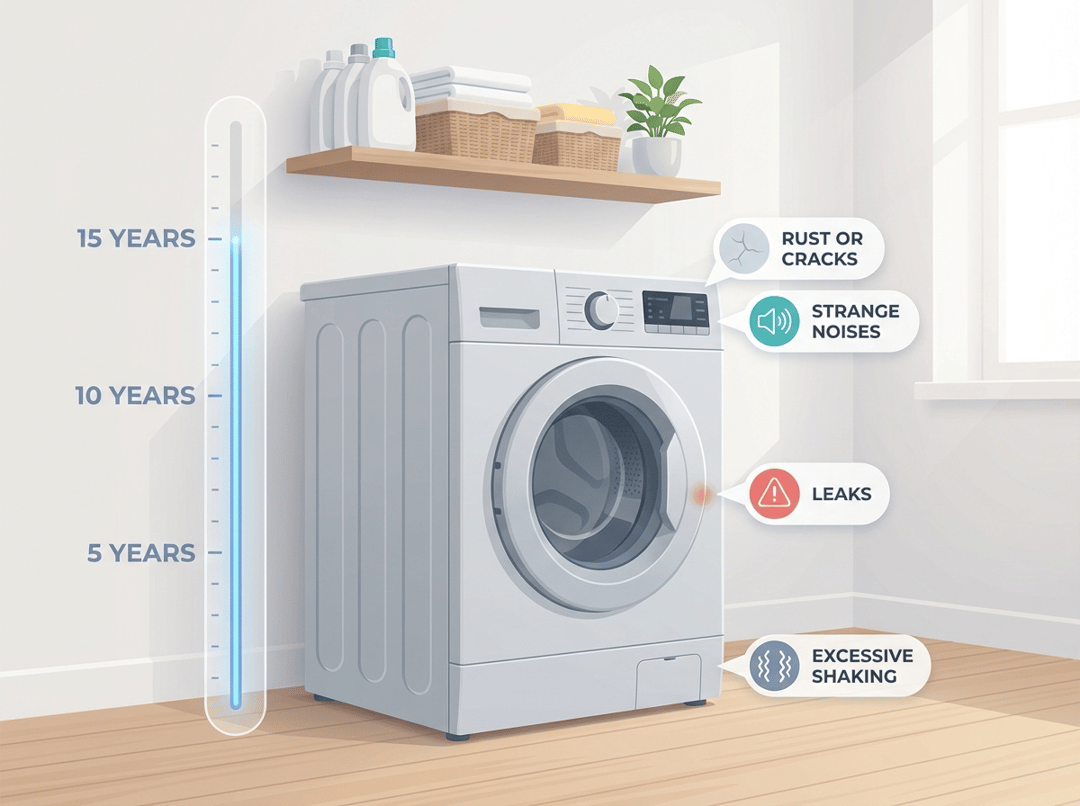
The average washing machine lasts between 10-15 years, according to data from the International Association of Certified Home Inspectors. However, some sources cite a more conservative range of 5-15 years, with newer models trending toward the shorter end of that spectrum.
Why such a wide range? Several factors play into this:
Top-Loaders vs. Front-Loaders
Traditional top-loading washers with agitators tend to outlast their front-loading counterparts. The simpler mechanical design means fewer components that can fail. Front-loaders, while more water and energy-efficient, have more complex door seals, drainage systems, and electronic controls that can malfunction.
Build Quality Has Declined
Research published in 2024 shows that washing machines have experienced a significant lifetime decrease—approximately 45% compared to earlier generations. Modern washers pack more features and electronics, but often sacrifice durability. That avocado-green washer from 1975 that's still chugging along in your grandmother's basement? It was built with heavier-duty components than most contemporary models.
Usage Intensity Matters
A machine running one or two loads per week will naturally outlast one handling daily loads for a family of six. Commercial-grade washers in laundromats are designed for this heavy use; residential models aren't.
Key Factors That Extend (or Shorten) Your Washer's Life
1. Maintenance Habits
Regular maintenance is the single biggest factor you control. Washers that receive proper care consistently outlive neglected units. This includes:
- Cleaning the detergent dispenser and door seals monthly
- Running cleaning cycles to prevent mold and residue buildup
- Checking and cleaning drain filters quarterly
- Using the correct amount and type of detergent (excess suds accelerate wear)
2. Water Quality
Hard water is a silent killer for washing machines. Mineral deposits accumulate in hoses, pumps, and heating elements, reducing efficiency and causing premature failure. If you live in an area with hard water, consider a water softener or use washing machine descaling products regularly.
3. Load Management
Overloading your washer doesn't just result in poorly cleaned clothes—it strains the motor, bearings, and suspension system. Conversely, running tiny loads wastes resources and doesn't provide enough cushioning, causing excessive vibration.
4. Installation Quality
A washing machine that isn't properly leveled will vibrate excessively, wearing out shock absorbers and bearings faster. Those adjustable feet aren't decorative—use a level during installation and recheck periodically.
Warning Signs Your Washing Machine Is Failing
Catching problems early can mean the difference between a $150 repair and a $1,200 replacement. Watch for these red flags:
Unusual Noises
- Grinding sounds: Often indicate bearing failure or foreign objects in the drum
- Squeaking: Typically points to worn belts or bearings
- Loud thumping: Suggests the drum has become unbalanced or suspension components have failed
Don't ignore noise changes. What starts as a minor squeak can quickly escalate to complete mechanical failure.
Water Issues
- Leaking water: Check door seals, hose connections, and the drain pump. Even small leaks indicate failing components
- Won't drain properly: Usually a clogged pump filter or failing drain pump
- Water won't fill: Could be inlet valve failure or clogged screens
Performance Problems
- Clothes still soaking wet after spin cycle: Indicates the drum isn't spinning at proper speed due to motor or belt issues
- Excessive vibration: Points to worn shock absorbers, broken suspension springs, or an unbalanced drum
- Inconsistent water temperature: Failing inlet valves or control board issues
- Won't complete cycles: Electronic control problems or sensor failures
Visible Deterioration
- Rust spots: Especially on the drum or cabinet, indicate the protective coating has failed
- Cracked or torn door seals: Allow leaks and reduce cleaning effectiveness
- Burning smell: Serious electrical issue requiring immediate attention
Age-Related Decline
If your washer is approaching the 10-year mark and showing multiple minor issues, replacement often makes more financial sense than continued repairs. The appliance repair industry is worth $6.5 billion annually—much of that spent on aging machines that would be better replaced.
Repair or Replace? Making the Right Call
Use this simple rule of thumb: If the repair costs more than 50% of a new machine's price, and your washer is over 8 years old, replace it.
For example, if a new comparable washer costs $800 and your repair estimate is $450, replacement makes more sense—especially if your current machine is already showing its age. You'll get improved energy efficiency, warranty coverage, and peace of mind.
However, for younger machines (under 5 years) with isolated issues, repair is usually the smarter choice.
Maximizing Your Washing Machine's Lifespan
Want to squeeze every possible year from your investment? Follow these expert-backed strategies:
- Use HE detergent in HE machines: Regular detergent creates excess suds that strain pumps and sensors
- Leave the door open between loads: Prevents mold growth and seal deterioration
- Don't let wet clothes sit: Remove laundry promptly to prevent mildew and odors that require aggressive cleaning
- Inspect hoses annually: Replace any showing cracks, bulges, or brittleness
- Clean the lint filter: Yes, washing machines have them too (usually in the drain pump area)
- Balance loads properly: Distribute weight evenly to minimize vibration
- Use cold water when possible: Reduces strain on heating elements
Conclusion
Most washing machines will serve you reliably for 10-15 years with proper care, though modern machines trend toward shorter lifespans than their predecessors. Pay attention to warning signs like unusual noises, leaks, and performance issues—catching problems early can extend your machine's life and prevent emergency replacements.
When your washer does start showing multiple symptoms or reaches that 10-year milestone with significant issues, don't throw good money after bad. Modern machines offer better efficiency and features that can offset the replacement cost through lower utility bills.
The key takeaway? Treat your washing machine well, stay alert to warning signs, and know when to call it quits. Your laundry room—and your wallet—will thank you.