
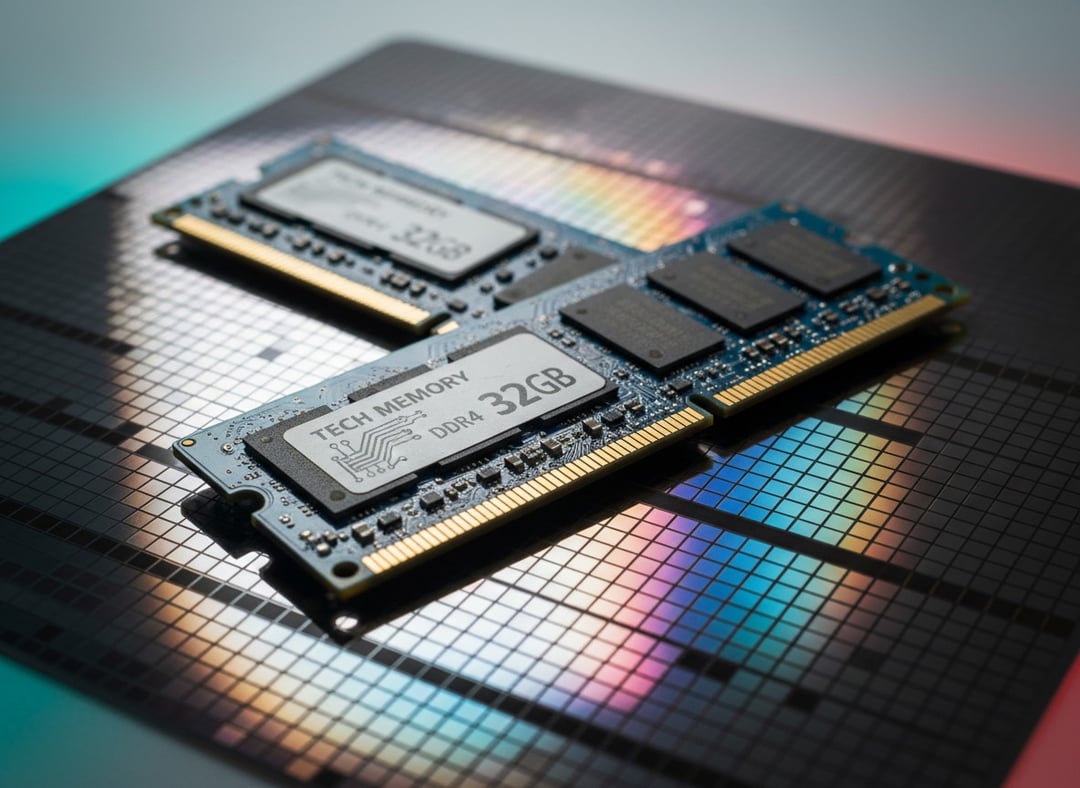
Massive Prepayments Are Reshaping the AI Memory Market
Big tech companies are committing billions of dollars up front to secure future memory supply, and that says a lot about where the AI industry is right now. Memory is no longer just another component in the server bill of materials. It has become a strategic choke point. The report describes a market where the biggest buyers are moving early, paying in advance, and effectively reserving production capacity before supply tightens further.
At the center of this shift is the explosive demand tied to AI infrastructure. Training and running advanced AI models requires enormous amounts of high-performance memory, especially the kind used alongside powerful accelerators and data center hardware. That has turned memory supply into something closer to a long-term strategic asset than a standard procurement line item.
Why AI Demand Is Driving High-Bandwidth Memory Contracts
High-bandwidth memory has become critical for AI servers
The article points to a surge in demand for memory used in AI systems, especially high-bandwidth memory, or HBM. This type of memory is essential in modern AI servers because it feeds data to accelerators at extremely high speeds. And when companies are racing to build larger AI clusters, even a small supply bottleneck can slow down deployment timelines in a big way.
That’s why buyers are no longer waiting for normal supply cycles to play out. They’re locking in future deliveries now. Prepayments help guarantee access, and in a market defined by scarcity, guaranteed access matters more than price optimization.
Memory makers gain funding and predictable demand
For suppliers, these deals do two things at once. First, they provide immediate capital. Second, they reduce uncertainty around future demand. When a major customer commits billions in advance, manufacturers can expand production with more confidence, invest in capacity, and prioritize output for the customers who have already paid to reserve it.
This creates a feedback loop. The stronger the demand outlook for AI infrastructure becomes, the more incentive buyers have to secure memory early. And the more buyers do that, the more memory supply starts getting allocated through strategic agreements instead of ordinary spot purchases.
Big Tech Prepayments Show How Tight The Supply Chain Has Become
Capacity reservations are replacing conventional purchasing
The article describes a clear change in behavior from large technology companies. Instead of buying memory as needed, they are entering agreements that look more like supply reservation strategies. That matters because it reflects a deeper fear in the market: if they don’t secure capacity now, they may not be able to get enough memory later when their AI hardware rolls out at scale.
In practical terms, this means the largest players can use their financial strength to move to the front of the line. Paying billions up front is not just about supply certainty. It is also about competitive advantage. If one company can build AI infrastructure faster because it secured enough memory, that advantage can ripple across cloud services, model development, and enterprise offerings.
Smaller buyers may face more pressure
There’s another side to this. When major firms reserve large portions of available production, smaller customers can get squeezed. They may face higher prices, longer lead times, or less flexibility in sourcing the memory they need. The article’s core point lands hard here: this isn’t just a story about demand growth. It’s a story about who gets priority when supply is limited.
That dynamic could widen the gap between the biggest AI players and everyone else. Companies with deep pockets can absorb the cost of early commitments. Others may have to wait, compromise, or redesign around what is available.
Memory Supply Has Become A Strategic AI Infrastructure Battleground
AI hardware growth is changing supplier relationships
What used to be a more transactional buyer-supplier relationship is starting to look much more strategic. When billions are committed in advance, memory manufacturers are not simply fulfilling orders. They are partnering, in effect, with the companies building the next wave of AI infrastructure.
This kind of arrangement reflects the scale of today’s AI buildout. Demand is strong enough, and supply risk is serious enough, that companies are willing to spend heavily before products are even shipped. That’s not normal purchasing behavior. It’s what happens when a component becomes mission critical and hard to replace.
Memory is now tied directly to deployment speed
The article makes it clear that memory availability can directly affect how quickly new AI systems go live. That’s the real issue underneath the headline. If compute is the engine, memory is the fuel delivery system. You can have ambitious AI plans, top-tier accelerators, and huge budgets, but if the memory supply isn’t there, those plans hit a wall.
So these billion-dollar prepayments are really about time. Time to deploy. Time to scale. Time to stay ahead of competitors. In the AI race, delays are expensive, and guaranteed memory supply helps reduce one of the biggest operational risks.
The Bigger Meaning Of Billion-Dollar Memory Deals
These agreements reflect confidence in long-term AI expansion
Companies do not commit this kind of money without believing demand will remain strong. The willingness to prepay billions signals confidence that AI infrastructure spending is not a short-lived surge. It suggests that the largest players expect continued expansion in model training, inference workloads, and data center buildouts that will keep memory demand elevated.
That confidence also reinforces the market’s broader direction. If buyers are reserving future production today, they are acting on the assumption that tomorrow’s memory supply will be even more valuable than it is now.
Supply control is becoming part of competitive strategy
The article ultimately frames memory procurement as more than an operational task. It is becoming part of corporate strategy. Securing memory supply helps protect roadmaps, defend product launch schedules, and support the rapid growth of AI services. In a constrained market, procurement turns into positioning.
And honestly, that may be the clearest takeaway here. The companies leading the AI race are not just competing on models, chips, or software stacks. They are competing on who can secure the physical resources needed to keep everything moving.


