
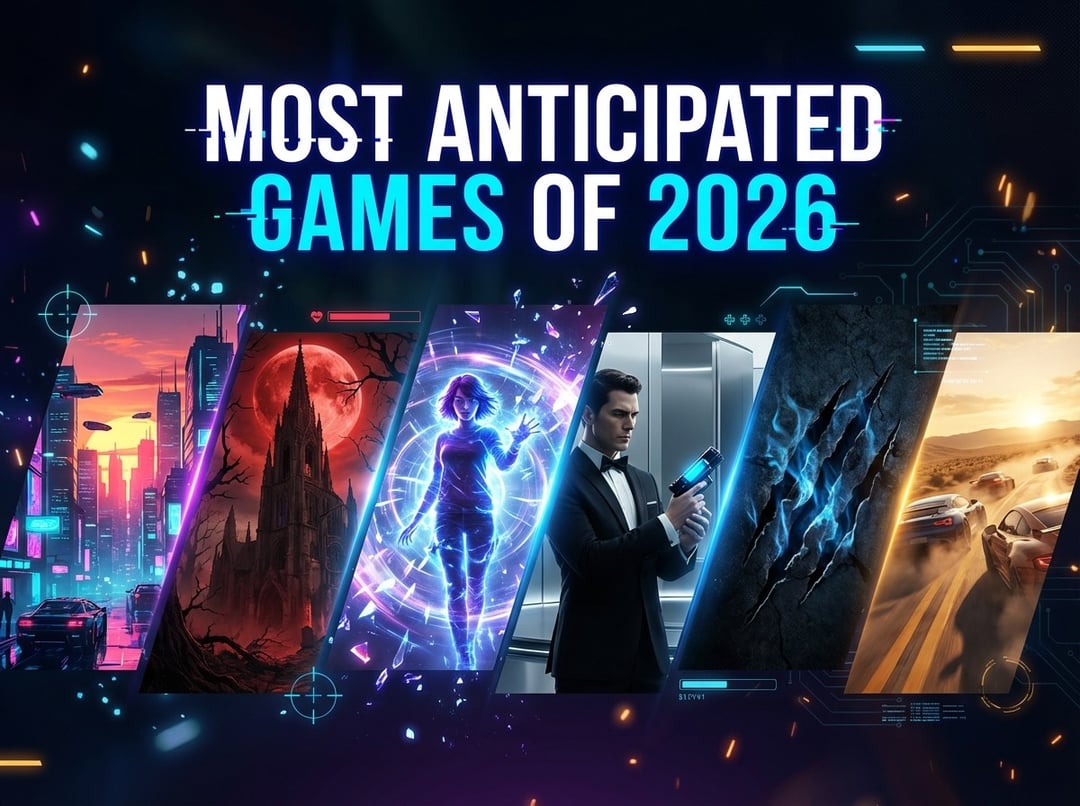
Why 2026 Could Define a Generation
Gaming rarely sees a lineup like what's coming our way in 2026. We're not just talking about a few high-profile releases—this is a year that could fundamentally reshape multiple genres and set new standards for what games can achieve. When people search for information about the Most Anticipated Games of 2026, they're looking at what might be one of the most stacked calendars in gaming history.
The timing is particularly fascinating because several of these titles represent either the culmination of decades-long wait times or the arrival of fresh concepts from studios at their creative peak. Rockstar's return to the criminal underworld after thirteen years. FromSoftware's surprising Switch 2 exclusive that could redefine multiplayer gaming. The final chapter in a beloved narrative saga that fans thought was already complete.
And honestly, that's just scratching the surface. Let's break it all down.
Grand Theft Auto VI
Why GTA 6 Transcends Gaming
Grand Theft Auto VI doesn't merely claim the top spot among the Most Anticipated Games of 2026—it occupies a category all its own. When Rockster announced the November 19, 2026 release date, the internet didn't just react to a product launch; it processed what could be the largest entertainment release in history across any medium.
Consider the numbers: GTA V launched in 2013. That's over thirteen years without a mainline entry in the franchise. An entire generation of gamers has grown up without experiencing a new GTA's cultural impact. That gap creates anticipation that few other titles can match.
What Makes This GTA Different
Rockstar isn't just returning to Vice City for nostalgia's sake. Early information reveals transformative elements:
- Dual Protagonists: Lucia and Jason bring a dynamic reminiscent of GTA V's Michael/Trevor/Franklin structure, suggesting complex narrative interweaving
- Modernized Vice City: The iconic location reimagined with contemporary technology, potentially offering denser urban environments and more dynamic weather systems
- Living World: Reports indicate unprecedented NPC behavior patterns—characters with routines, relationships, and motivations beyond simple pathfinding
- Scale and Detail: If Red Dead Redemption 2 demonstrated anything, it's Rockstar's commitment to microscopic detail in massive worlds
The Cultural Impact Expectation
Here's what sets the anticipation apart: GTA 6 isn't just waiting for a game's release—it's readying for a cultural moment. The last time a game defined its year quite like this might be Cyberpunk 2077's 2020 launch or RDR2's 2018 debut. But honestly, those comparisons likely undersell GTA 6's potential reach.
The release window November 19, 2026, positions a holiday season launch that could dominate headlines, social media conversations, and watercooler discussions for months afterward. And let's be clear—Delays remain possible given Rockstar's quality standards, but the current confidence in that date suggests a level of completion that previous targets lacked.
Resident Evil Requiem
A Franchise at Its Creative Peak
Capcom's Resident Evil renaissance began in 2017 with the series' seventh entry, and Resident Evil Requiem (launching February 27, 2026) appears positioned as the definitive statement of this modern era. What makes RE Requiem particularly fascinating among the Most Anticipated Games of 2026 is how it synthesizes everything Capcom has learned across its recent remakes and new entries.
The Dual Protagonist Innovation
Resident Evil games have almost always centered on single-player experiences. RE Requiem breaks that convention:
- Leon Kennedy Returns: The veteran protagonist returns to headline the survival horror portion, drawing from RE4's action-heavy template
- Grace Ashcroft Introduces Fresh Perspectives: The newcomer handles the psychological horror elements, channeling Village's oppressive atmosphere
- Dynamic Perspective Switching: Players can toggle between first-person and third-person viewpoints, a first for a mainline entry that should dramatically change how encounters play out
Why This Matters for Horror Fans
The Resident Evil franchise has fundamentally shifted how gaming approaches horror. The original RE games popularized tank controls and fixed camera angles. RE4 reinvented third-person action. RE7 proved first-person could deliver terrifying experiences. RE Requiem's dual-perspective approach could represent the next evolutionary step—giving players unprecedented choice in how they engage with horror.
Maybe it's just me, but the February 27 release date suggests Capcom is confident this isn't getting lost in the holiday crush. They're positioning RE Requiem as a standalone event, not one contender among many.
The Duskbloods
FromSoftware's Calculated Risk
Among the Most Anticipated Games of 2026, few announcements generated shockwaves like FromSoftware revealing a Switch 2 exclusive. The Duskbloods (2026, platform-specific date TBD) represents both a significant departure from the studio's typical PC-first approach and a fascinating creative experiment.
Hidetaka Miyazaki described the project as "more a loose string of ideas than a proper presentation" during initial discussions with Nintendo—which somehow makes the final commitment even more intriguing.
Bloodborne's Spiritual Evolution
Early comparisons position The Duskbloods as to Bloodborne what Elden Ring was to Dark Souls. What does that mean in practice?
- Gothic Horror Aesthetics in Open World: The signature Victorian nightmare of Bloodborne expanded into exploration-focused environments
- Vampire-Like Bloodsworn Characters: Over a dozen selectable protagonists, each with unique weapons and firearms
- Eight-Player Multiplayer Architecture: PvP and PvE support for up to eight players simultaneously across various maps
- Switch 2 Technical Foundation: Built specifically for Nintendo's new hardware, likely maximizing its unique capabilities
Why This Changes the Conversation
The Dark Souls creator embracing Nintendo hardware exclusively signals something significant about where the industry is heading. Switch 2 may offer capabilities we haven't fully grasped yet—and FromSoftware's trust in the platform speaks volumes about its potential.
For players who've been begging for a Bloodborne successor, this isn't exactly that—but it might be the closest we get for a long time. And honestly, that's worth getting excited about.
Life Is Strange: Reunion
The Max and Chloe Finale
Emotional investments in gaming characters run deep, and few characters have generated more dedication than the duo from the original Life Is Strange. Life Is Strange: Reunion (March 26, 2026) represents something genuinely rare: bringing back two protagonists whose stories were allegedly complete to provide the definitive conclusion fans never expected to receive.
What's Different This Time
Several elements set Reunion apart within the Most Anticipated Games of 2026:
- Dual Playable Characters: Gamers control both Max and Chloe, a first for the series
- Complete Release Structure: Unlike the original's episodic format, the entire experience launches simultaneously
- Narrative Consequences: Choices from the first game AND 2024's Life Is Strange: Double Exposure directly impact Reunion's story path
- Caledon University Setting: Max serves as a photography teacher when a devastating fire sets the mystery in motion
Why Emotional Resonance Matters
Here's the thing about Life Is Strange entries that land effectively: they're less about gameplay mechanics and more about connection, consequence, and the weight of difficult decisions. March 26 positioning puts Reunion between RE Requiem and the spring blockbuster rush—as if Square Enix recognizes this needs breathing room for its character-focused approach to resonate.
The fact that this concludes "Max and Chloe's story" signals definitive closure. No dangling narratives, no ambiguous endings—just the final chapter in a relationship that defined emotional storytelling in modern gaming.
007 First Light
Bond's Gaming Problem (And Potential Solution)
James Bond video games have a history of inconsistent quality. From the legendary GoldenEye 007 to disappointing licensed products, finding the right formula for 007 has proven surprisingly difficult. 007 First Light (May 27, 2026) aims to solve that equation with an original narrative rather than direct film adaptation.
What Makes First Light Different
Several key elements distinguish this entry among the Most Anticipated Games of 2026:
- Cinematic Mission Structure: Levels designed to replicate the set-piece spectacle of Bond films
- Emphasis on Stealth Systems: Rather than pure shooter mechanics, First Light prioritizes tactical infiltration over combat
- Original Narrative Content: Freedom from adapting existing storylines allows creative license that adaptations often lack
- May 27 Release Window: Launching just ahead of Memorial Day weekend, strategically positioning for summer momentum
Why This Entry Could Finally Work
The spy genre's core elements translate exceptionally well to modern gaming mechanics—infiltration systems, social engineering missions, high-speed vehicle chases, gadget utilization. These aren't just gameplay possibilities; they're intrinsic to the Bond identity.
What's always held previous entries back has been execution, not potential. If First Light finds the balance between tactical gameplay and larger-than-life action, it could finally deliver the Bond experience gamers have wanted for decades.
Control Resonant
Remedy's Weirdness Multiplied
Control arrived in 2019 as something gloriously strange—a paranormal shooter where government bureaucracy meets cosmic horror. It felt refreshing because it refused to be just another shooter. Control Resonant (2026, specific date TBD) expands that universe in ways that could make the original feel like a prologue.
The Genre Shift
Here's where things get interesting: Resonant represents a significant pivot:
- New Protagonist Perspective: Jesse Faden's brother Dylan takes center stage, suggesting different narrative angles
- Action RPG Foundation: Moves away from pure third-person shooting toward role-playing game systems
- Melee Combat Emphasis: Transitions from ranged combat to visceral close-quarters combat mechanics
- Expanded Supernatural Universe: Deepens the lore around the Oldest House, the Hiss, and the Federal Bureau of Control
Why Original IPs Need Sequels
Original intellectual properties represent increasing rarity in gaming dominated by sequels, remakes, and live-service models. Control demonstrated that audiences still crave something genuinely different—games that defy easy categorization and trust players with complex concepts.
Control Resonant cements Remedy's commitment to creative risk. Maybe that's what makes it one of the more intriguing entries among the Most Anticipated Games of 2026—it's exactly the kind of follow-up that proves weirdness can be financially viable, not just critically acclaimed.
Tomb Raider: Legacy of Atlantis
Remaking History (Again)
Crystal Dynamics has taken Lara Croft through several reinventions. The Survivor trilogy grounded the character in gritty realism through three entries spanning 2013-2018. Tomb Raider: Legacy of Atlantis (2026, specific date TBD) takes a different approach entirely—it returns to the 1996 original for a full-scale remake, not a remaster.
Distinguishing From Previous Efforts
This isn't the franchise's first attempt at reinterpreting its origins:
- Tomb Raider: Anniversary (2007): Previously remade the first game, suggesting Legacy of Atlantis approaches the same material with modern sensibilities
- Scope Expansion: Maintains the original's focus on action, exploration, and puzzle-solving while scaling to contemporary game expectations
- 2026 Positioning: Strategic placement ahead of 2027's Tomb Raider: Catalyst, which continues Lara's adult narrative
Why the Original Matters
That first Tomb Raider accomplished something revolutionary—it proved female protagonists could anchor blockbuster action games. It popularized 3D platforming on consoles and introduced players to a character who would become one of gaming's most recognizable icons.
Legacy of Atlantis isn't merely nostalgia; it's reintroduction. For a generation who grew up after 1996, this could be their first meaningful encounter with where Lara's legacy began—reimagined through twenty-five years of industry evolution.
Marvel's Wolverine
Insomniac Games has established themselves as the premier developer for Marvel superhero experiences through their PlayStation Marvel's Spider-Man series. Marvel's Wolverine (2026, specific date TBD) marks their expansion beyond web-slingers—and honestly, the character has been waiting.
Why Wolverine Deserves This Treatment
Several factors position Wolverine as natural fit for Insomniac's approach:
- Brutal Combat Mechanics: The character's fighting style meshes perfectly with visceral action systems
- Mature Narrative Potential: Unlike Spider-Man's relatively family-friendly approach, Wolverine permits darker, more complex storytelling
- PlayStation Console Exclusive: Following Spider-Man's model suggests platform-specific refinement and optimization
- Character Over Costume: Focus on Logan's internal conflict rather than just costume showcases
What Sets This Apart From Previous Adaptations
Wolverine has had countless game appearances across decades. Most ranged from mediocre to forgettable. The difference here is developer pedigree and modern resources—Insomniac doesn't just understand Marvel properties; they understand how to translate those properties into compelling interactive experiences.
Look, superhero games face a ceiling—they can only be so compelling before suspension of belief limits engagement. But Wolverine's grounded ferocity bypasses many of those constraints. This could be different.
Forza Horizon 6
Open-world racing games don't need redefinition—they need refinement, and Playground Games has been refining the Horizon formula to near-perfection. Forza Horizon 6 (May 2026, approximately May 19) continues what might be gaming's most consistently reliable annual franchise.
Why Horizon Keeps Working
The Horizon series succeeds on principles that seem simple but require exceptional execution:
- Beautiful Real-World Locations: Every installment captures the essence of distinctive global settings
- Balanced Physics Model: Enough realism for enthusiasts, enough accessibility for casual players
- Varied Event Types: Racing, stunt runs, treasure hunts, showcase events—constant variety within the core loop
- Festival Atmosphere: Social environment that transforms competition into celebration
What Could This Entry Offer
With the May 2026 window, Forza Horizon 6 likely aims for spring momentum rather than holiday competition. Location speculation remains unconfirmed, but Japan or Australia would offer visual spectacle matching previous entries.
Here's what's particularly remarkable: in a year packed with emotionally demanding, time-intensive experiences like Life Is Strange, Control Resonant, and potentially GTA VI, having a comfortable drop-in-and-play option isn't just appealing—it's almost necessary. Sometimes you don't want fifty hours of narrative investment. Sometimes you just want expensive cars in beautiful landscapes.
Looking Beyond the Heavy Hitters
Emerging Titles Worth Watching
The Most Anticipated Games of 2026 list could extend significantly beyond these core entries. Additional projects already generating interest include:
- Elden Ring: Tarnished Edition (Switch 2, 2026) – FromSoftware's enhanced version of the game that defined 2022, brought to Nintendo's new hardware with performance-focused optimizations and potential exclusive content. The delay from 2025 speaks to their commitment—the team wants this running flawlessly, not merely functional.
- Borderlands 4 (Switch 2, 2026 window uncertain) – Gearbox's chaotic co-op shooter makes the jump to Nintendo hardware, though recent reports suggest potential Switch 2 delays. If you've somehow missed the gun-dropping, fourth-wall-breaking mayhem that defined this series, this could be your perfect entry point.
- Saros (2026, platforms unconfirmed) – From the debris of V1 Interactive comes this new sci-fi third-person shooter, emphasizing vertical gameplay mechanics and environmental traversal. Original IPs like this deserve attention because every great franchise starts as someone taking a risk.
And honestly, that's not even close to everything. Indie darlings will likely emerge from nowhere, mid-tier projects could surprise everyone, and Nintendo still hasn't fully revealed the Switch 2 launch lineup beyond the heavy hitters mentioned here.
The Giants Who Won't Be Here: Elder Scrolls VI and Witcher 4
Here's the reality that defies expectations: two role-playing behemoths that many gamers hoped might materialize in 2026 definitively won't be joining the party. And honestly, acknowledging their absence matters almost as much as celebrating what is arriving.
The Elder Scrolls VI remains trapped in development limbo, despite Bethesda confirming it left pre-production and Todd Howard declaring it the studio's primary priority back in November 2025. Leaked documents suggested 2026 at the earliest, but most realistic estimates point toward 2028 or later. The game's being built on Creation Engine 2—the same foundation beneath Starfield—and Phil Spencer hinted it might target the next-generation Xbox hardware. After roughly seventeen years since Skyrim landed, another multi-year wait feels almost inevitable.
The Witcher 4 faces similar delays, with CD Projekt Red explicitly confirming it won't launch in 2026. The studio has 447 developers actively working on the Ciri-led RPG, built in Unreal Engine 5 as the first installment in a planned six-year trilogy. Current projections target 2027 at the absolute earliest. While analyst chatter suggests CDPR might drop substantial Witcher 3 DLC in 2026, the main sequel remains firmly on the horizon.
And honestly, waiting beats crashing. Both studios learned hard lessons from underbaked launches—CDPR with Cyberpunk's disastrous 2020 debut and Bethesda with Starfield's mixed 2023 reception. If Elder Scrolls VI and Witcher 4 need extra time to deliver the polish these franchises demand, I'd rather wait fifteen years for something legendary than three years for something passable.
Platform Wars Done Right: How 2026's Diversity Benefits Every Player
Breaking the Sequel Fatigue
Here's what's genuinely encouraging about this lineup: yes, there are sequels and remakes aplenty, but there's also genuine experimentation happening alongside the safe bets. The Duskbloods represents FromSoftware trying something structurally new. Control Resonant pivots hard from its predecessor's established formula. Life Is Strange: Reunion concludes an emotional arc most companies would have left alone.
That balance matters. Sequels maintain business stability, but creative evolution keeps the medium interesting. 2026 appears to have both in healthy measure.
Platform Diversity: Everyone Gets Something
Looking across the release calendar reveals something increasingly rare in modern gaming: platform holders actually competing on content merit rather than acquisition.
- PlayStation 5: Wolverine, Life Is Strange Reunion, Resident Evil Requiem (timed?), Control Resonant
- Xbox Series X/S: Forza Horizon 6, cross-platform support for many titles
- Switch 2: The Duskbloods exclusive, Elden Ring Tarnished Edition enhanced version, Borderlands 4 (when that delay resolves)
- PC: Virtually everything, often with performance advantages
That's a healthier ecosystem than one platform buying exclusivity and withholding games from others. Competition through content creation benefits everyone.
Practical Gaming Decisions for 2026
Budget Reality Check
Let's be honest: 2026 could become financially brutal. At twenty AAA games across various price points, full-price purchases at launch add up quickly. Here's a realistic approach:
Tier 1: Must-Play at Launch – GTA VI (cultural event), perhaps one franchise you personally can't wait for
Tier 2: Wait-and-See – Almost everything else. Read reviews, watch gameplay streams, check performance analyses
Tier 3: Sale Hunting – Games that interest you but aren't personal necessities. Prices typically drop 30-40% within months
There's no shame in being a smart consumer. The games will still be there six months later.
Time Management Reality
Equally important: most of these represent substantial time investments. GTA VI will likely demand 80+ hours for meaningful completion. Life Is Strange: Reunion will deserve focused attention for its narrative impact. Control Resonant's action RPG progression systems eat hours.
Nobody reasonably completes everything in a stacked year like this. Choose what matters personally. Let someone else be the completionist.
When Dates Could Still Change
Delay Probability Assessment
Here's the uncomfortable truth: several of these dates remain targets, not guarantees. Based on current information:
High Confidence: Life Is Strange: Reunion (March 26), Resident Evil Requiem (February 27), 007 First Light (May 27) – Square Enix, Capcom, and their respective partners have established track records of hitting recent announced dates.
Medium Risk: GTA VI (November 19) – Rockstar's confidence appears higher than previous targets, but their polish standards sometimes demand extra months regardless of external expectations.
Unclear: Forza Horizon 6, Tomb Raider: Legacy of Atlantis, Control Resonant, Marvel's Wolverine – Wide release windows or unspecified 2026 targets leave substantial flexibility.
Platform Specific: The Duskbloods, Elden Ring Tarnished Edition – Tied to Switch 2 hardware performance and Nintendo's strategic timing, adding variables beyond developer control.
Why Delays Aren't Bad News
And look—delays aren't failures. The Cyberpunk 2077 launch demonstrated what happens when studios rush products to meet arbitrary dates. Most everyone would rather wait for polished experiences than encounter buggy, compromise-filled releases. It's frustrating when something gets pushed, sure. But better that than playing something disappointing.
Final Thoughts
2026 isn't just about individual games, though the lineup certainly provides plenty to discuss. It's about witnessing an industry continue maturing while preserving the experimental spirit that makes gaming special. Technical achievement reaching new heights. Storytelling techniques evolving deeper connections. Multiplayer systems enabling unprecedented social experiences.
Maybe some entries won't live up to anticipation. Maybe development delays push promising titles into 2027. Maybe unexpected gems emerge from studios nobody saw coming. That unpredictability is part of what makes upcoming years exciting.
The Most Anticipated Games of 2026 give us a roadmap. But the actual journey ahead remains unwritten, full of surprises, disappointments, triumphs, and moments we'll remember long after the year ends.
Here's hoping the experiences awaiting us live up to the promise. Because honestly, this hobby deserves nothing less.